MILFORD, Mass., June 1, 2026 /PRNewswire/ -- 74th ASMS Conference on Mass Spectrometry and Allied Topics— Waters Corporation (NYSE: WAT) today announced the launch of the Waters Cyclic IMS P20 Mass Spectrometer, a high-resolution structural and spatial omics platform designed to help scientists see biology more clearly, and act on it faster. Combining multipass Cyclic Ion Mobility Spectrometry with an enhanced suite of fragmentation, probing, and imaging capabilities, this unique and powerful instrument delivers confident insights for the early detection of disease signals, from protein misfolding to post-translational modifications. The system's full‑spectrum molecular imaging unlocks unparalleled visualization within a single experiment1 to accelerate discovery and development, and power deeper understanding of complex biology.
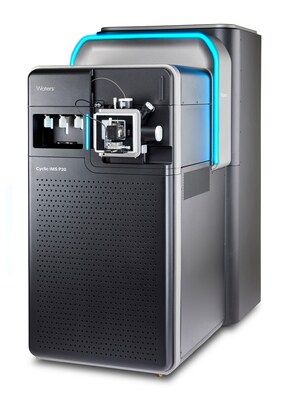
"Waters recognizes that advanced tools for structural and spatial omics play a critical role in delivering therapeutic breakthroughs," said James Hallam, Vice President & General Manager, Liquid Chromatography-Mass Spectrometry, Waters Analytical Sciences, Waters Corporation. "With its powerful fusion of capabilities, the Cyclic IMS P20 MS delivers a previously unattainable view into subtle molecular differences, unlocking a new level of understanding of the mechanisms that drive disease and advancing next‑generation discovery."
As researchers pursue larger and more heterogeneous therapeutic targets, analytical workflows need higher sensitivity, higher structural resolution, and easier-to-adopt methods. The Cyclic IMS P20 Mass Spectrometer meets that need with a more than a 10-fold increase in MS/MS sensitivity compared to its predecessor,2 an upper mass range extended by more than 50% to over 100 kDa,3 and a set of complementary structural probing approaches, including tandem ion mobility spectrometry (IMSn), electron-capture dissociation (ECD), surface-induced dissociation (SID), and collision-induced unfolding (CIU) – delivering the most comprehensive spatial and structural molecular view within a single platform.
"My lab studies proteins involved in misfoldings that drive human disease, which are notoriously difficult to characterize. We leverage the advanced capabilities of Cyclic IMS P20 MS to perform complex tandem ion mobility experiments on low‑abundance forms of a key molecule involved in the pathogenesis of Type II diabetes," said Kostas Thalassinos, Ph.D., Professor of Mass Spectrometry and Academic Lead, Institute of Structural and Molecular Biology, University College London. "The increase in sensitivity delivered by the new functionality is truly remarkable. It stands to significantly accelerate our analyses, potentially by an order of magnitude, and enables us to probe critical low‑abundance species in far greater detail. These rare molecular populations are essential for delineating the mechanisms that drive human disease."
The Cyclic IMS P20 Mass Spectrometer also brings Matrix-Assisted Laser Desorption/Ionization (MALDI) and Desorption Electrospray Ionization (DESI) imaging sources together in one system, pioneering their combination with advanced multipass cyclic ion mobility and IMS separation to help researchers see more, with greater clarity, directly in their samples. This unique approach broadens coverage across small molecules, lipids, peptides, and proteins, while separating isobaric and stereoisomeric compounds. Additionally, the system delivers multi-dimensional insights that elucidate links between molecular composition and the tissue microenvironment, supporting biomarker identification directly from tissue. These rich, easily-interpreted molecular maps provide increased confidence in lipidomics, drug and metabolite localization, translational research, and other experiments requiring visualization.
The Waters Cyclic IMS P20 Mass Spectrometer will be showcased at ASMS 2026 and is expected to be available globally beginning September 2026. For more information or to request a demo, visit product page.
Additional Resources:
Waters and Cyclic are trademarks of Waters Corporation or its affiliates. All other trademarks are the property of their respective owners.
The P in Cyclic IMS P20 denotes Premium, the highest performance tier from Waters, and 20 reflects the platform's evolution from the SELECT SERIES lineage under Waters' new product naming convention.
About Waters Corporation:
Waters Corporation (NYSE: WAT) is a global leader in life sciences and diagnostics, dedicated to accelerating the benefits of pioneering science through analytical technologies, informatics, and service. With a focus on regulated, high-volume testing environments, our innovative portfolio harnesses deep scientific expertise across chemistry, physics, and biology. We collaborate with customers around the world to advance the release of effective, high-quality medicines, ensure the safety of food and water, and drive better patient outcomes by detecting diseases earlier, managing routine infections, and combating antibiotic resistance. Through a shared culture of relentless innovation, our passionate team of ~16,000 colleagues turn scientific challenges into breakthroughs that improve lives worldwide. For more information, please visit www.waters.com/about.
References:
Contact:
Molly Gluck
Head of External Communications
Waters Corporation
508.498.9732
molly_gluck@waters.com

Photo - https://mma.prnewswire.com/media/2991658/Waters_Cyclic_IMS_P20.jpg
Logo - https://mma.prnewswire.com/media/2071755/Waters_Corporation_Logo.jpg
 View original content:https://www.prnewswire.co.uk/news-releases/waters-unveils-cyclic-ims-p20-ms-the-new-benchmark-in-structural-and-spatial-omics-302786911.html

Der Bundesrat verschärft im Streit um das Frühfranzösisch den Ton und greift zu einem bundesrechtlichen Instrument. Alle Primarschülerinnen und Primarschüler in der Schweiz sollen künftig zwingend eine zweite Landessprache lernen. Um dieses Ziel durchzusetzen, hat die Landesregierung eine Revision des Sprachengesetzes in die Vernehmlassung geschickt. Sie reagiert damit auf Vorstösse in mehreren deutschsprachigen Kantonen, Französisch aus den Stundenplänen der Primarschule zu streichen.
Im Zentrum steht die Frage, welche Rolle die Landessprachen im obligatorischen Unterricht spielen sollen. Für den Bundesrat ist dies eine «Frage von nationaler Bedeutung». Die Bundesverfassung verpflichte Bund und Kantone gemeinsam, die Landessprachen zu erhalten, die Verständigung zwischen den Sprachgemeinschaften zu stärken und nationale Minderheiten zu schützen, hält die Regierung fest. Der Bund sehe sich damit in der Verantwortung, den Zusammenhalt zwischen den Sprachregionen und den Respekt vor der sprachlichen Vielfalt zu sichern, während die Kantone ihr Schulwesen so zu harmonisieren hätten, dass Qualität und Durchlässigkeit des Bildungsraums Schweiz gewahrt bleiben.
Der Konflikt entzündet sich an der 2004 beschlossenen Sprachenstrategie der Kantone, die 2009 im HarmoS-Konkordat verankert wurde. Diese sieht vor, dass Kinder in der Primarschule zwei Fremdsprachen erlernen – darunter eine zweite Landessprache. In einzelnen Kantonen gibt es inzwischen Bestrebungen, den Unterricht einer Landessprache als Fremdsprache auf der Primarstufe zu streichen. Das widerspreche der gemeinsamen Strategie, schreibt der Bundesrat und zeigt sich über diese Entwicklung «beunruhigt».
Um gegenzusteuern, legt die Regierung zwei Varianten für eine Gesetzesänderung vor. Die erste folgt dem HarmoS-Modell: In der Primarschule sollen obligatorisch zwei Fremdsprachen unterrichtet werden, eine Landessprache und Englisch. Damit würde die heutige Praxis in den 15 HarmoS-Kantonen bundesrechtlich abgesichert und für alle gelten, sollte es nötig werden. Die zweite Variante lässt den Kantonen mehr Spielraum: Sie verpflichtet lediglich dazu, dass eine zweite Landessprache spätestens ab der Primarschule und durchgehend bis zum Ende der obligatorischen Schulzeit unterrichtet wird, ohne Englisch explizit als zweite Fremdsprache vorzuschreiben.
Mit der Revision will der Bundesrat den Rahmen abstecken für den Fall, dass die Kantone ihre Sprachenstrategie ganz oder teilweise aufgeben. Konkrete Entscheide sind noch offen: Zunächst läuft bis zum 5. Oktober 2026 eine Vernehmlassung, in der Kantone, Parteien und weitere Akteure Stellung beziehen können. Erst danach wird sich zeigen, ob sich das strengere HarmoS-Modell oder die flexibelere Lösung durchsetzt – und wie viel Gewicht der Bund seiner sprachpolitischen Rolle im Schulbereich tatsächlich geben will.



