MILFORD, Mass., June 9, 2026 /PRNewswire/ -- Waters Corporation (NYSE: WAT) today announced the launch of the Waters TA Instruments™ Coin Cell Differential Scanning Calorimeter (DSC), designed to transform battery safety testing. Purpose-built for battery scientists, the Coin Cell DSC enables direct testing of fully assembled coin cells, eliminating time-intensive preparation steps while delivering faster, more descriptive safety and performance insights.
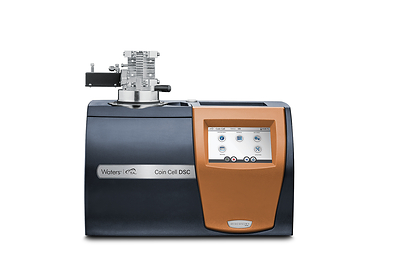
The Coin Cell DSC is the only commercially available DSC1 that provides multidimensional data capture and enables researchers to collect whole-cell thermal data while simultaneously measuring evolved gas and electrochemical performance. By incorporating voltage monitoring and charge/discharge capability, researchers can directly correlate thermal and electrochemical behavior enabling earlier insights into thermal runaway and battery failure. It can also be coupled with MS, Fourier Transform Infrared Spectroscopy (FTIR), or Gas Chromatography-Mass Spectrometry (GC-MS) to enable direct analysis of off-gas composition.
"The Coin Cell DSC represents a significant advancement in battery thermal analysis," said Yu Cheng, Vice President, Research and Development and Product Solutions, Materials Sciences, Waters Corporation. "Simultaneously capturing thermal, evolved gas, and electrochemical data is not only faster, but also correlates data from the same sample for more exacting insights earlier in development. With its broad temperature range and streamlined workflows, the system is designed to reduce experimental complexity while outperforming current approaches."
The Coin Cell DSC introduces a unique capsule design that eliminates the highly time-consuming need for cell teardown, reducing the average sample preparation time by more than 90%.2 This approach preserves sample integrity while significantly accelerating data generation.
The new system redefines thermal analysis by integrating advanced temperature performance, efficient workflows, and multidimensional data capture into a single platform. With an industry-leading –80 °C to 600 °C range,3, 4 the Coin Cell DSC enables comprehensive analysis of low- and high-temperature behavior, expanding future applications in development and QA/QC.
"The battery industry has long needed a solution that bridges the gap between materials thermal analysis and full-cell DSC testing. This technology enables the evaluation of full-cell thermal stability by incorporating gas analysis and electrochemical data—capabilities that are essential for advancing early-stage battery safety research," said Shirley Meng, Professor, Pritzker School of Molecular Engineering, University of Chicago and Director, Energy Storage Research Alliance (ESRA).
Traditional battery safety testing methods, such as accelerating rate calorimetry (ARC), are deployed during late-stage research and development and require large cell formats, specialized facilities, and long experiment times. In contrast, the Coin Cell DSC enables direct evaluation of intact coin cells earlier and faster, streamlining development and reducing risk.
The Waters TA Instruments Coin Cell DSC is available for order now, with shipments expected to begin in August 2026.
Additional Resources:
Waters and TA Instruments are trademarks of Waters Corporation or its affiliates. All other marks are the property of their respective owners.
About Waters Corporation:
Waters Corporation (NYSE: WAT) is a global leader in life sciences and diagnostics, dedicated to accelerating the benefits of pioneering science through analytical technologies, informatics, and service. With a focus on regulated, high-volume testing environments, our innovative portfolio harnesses deep scientific expertise across chemistry, physics, and biology. We collaborate with customers around the world to advance the release of effective, high-quality medicines, ensure the safety of food and water, and drive better patient outcomes by detecting diseases earlier, managing routine infections, and combating antibiotic resistance. Through a shared culture of relentless innovation, our passionate team of ~16,000 colleagues turn scientific challenges into breakthroughs that improve lives worldwide. For more information, please visit www.waters.com/about.
References:
Contact:
Molly Gluck
Head of External Communications
Waters Corporation
508.498.9732
molly_gluck@waters.com

 View original content to download multimedia:https://www.prnewswire.co.uk/news-releases/waters-launches-coin-cell-differential-scanning-calorimeter-dsc-to-advance-battery-safety-with-integrated-thermal-evolved-gas-and-electrochemical-analysis-302794780.html

Der Bundesrat verschärft im Streit um das Frühfranzösisch den Ton und greift zu einem bundesrechtlichen Instrument. Alle Primarschülerinnen und Primarschüler in der Schweiz sollen künftig zwingend eine zweite Landessprache lernen. Um dieses Ziel durchzusetzen, hat die Landesregierung eine Revision des Sprachengesetzes in die Vernehmlassung geschickt. Sie reagiert damit auf Vorstösse in mehreren deutschsprachigen Kantonen, Französisch aus den Stundenplänen der Primarschule zu streichen.
Im Zentrum steht die Frage, welche Rolle die Landessprachen im obligatorischen Unterricht spielen sollen. Für den Bundesrat ist dies eine «Frage von nationaler Bedeutung». Die Bundesverfassung verpflichte Bund und Kantone gemeinsam, die Landessprachen zu erhalten, die Verständigung zwischen den Sprachgemeinschaften zu stärken und nationale Minderheiten zu schützen, hält die Regierung fest. Der Bund sehe sich damit in der Verantwortung, den Zusammenhalt zwischen den Sprachregionen und den Respekt vor der sprachlichen Vielfalt zu sichern, während die Kantone ihr Schulwesen so zu harmonisieren hätten, dass Qualität und Durchlässigkeit des Bildungsraums Schweiz gewahrt bleiben.
Der Konflikt entzündet sich an der 2004 beschlossenen Sprachenstrategie der Kantone, die 2009 im HarmoS-Konkordat verankert wurde. Diese sieht vor, dass Kinder in der Primarschule zwei Fremdsprachen erlernen – darunter eine zweite Landessprache. In einzelnen Kantonen gibt es inzwischen Bestrebungen, den Unterricht einer Landessprache als Fremdsprache auf der Primarstufe zu streichen. Das widerspreche der gemeinsamen Strategie, schreibt der Bundesrat und zeigt sich über diese Entwicklung «beunruhigt».
Um gegenzusteuern, legt die Regierung zwei Varianten für eine Gesetzesänderung vor. Die erste folgt dem HarmoS-Modell: In der Primarschule sollen obligatorisch zwei Fremdsprachen unterrichtet werden, eine Landessprache und Englisch. Damit würde die heutige Praxis in den 15 HarmoS-Kantonen bundesrechtlich abgesichert und für alle gelten, sollte es nötig werden. Die zweite Variante lässt den Kantonen mehr Spielraum: Sie verpflichtet lediglich dazu, dass eine zweite Landessprache spätestens ab der Primarschule und durchgehend bis zum Ende der obligatorischen Schulzeit unterrichtet wird, ohne Englisch explizit als zweite Fremdsprache vorzuschreiben.
Mit der Revision will der Bundesrat den Rahmen abstecken für den Fall, dass die Kantone ihre Sprachenstrategie ganz oder teilweise aufgeben. Konkrete Entscheide sind noch offen: Zunächst läuft bis zum 5. Oktober 2026 eine Vernehmlassung, in der Kantone, Parteien und weitere Akteure Stellung beziehen können. Erst danach wird sich zeigen, ob sich das strengere HarmoS-Modell oder die flexibelere Lösung durchsetzt – und wie viel Gewicht der Bund seiner sprachpolitischen Rolle im Schulbereich tatsächlich geben will.