SHENZHEN, China, May 14, 2026 /PRNewswire/ -- vivo today announced a milestone collaboration with the talented filmmaker Sam Kolder to present "The Garden Route", a cinematic short film shot entirely on the latest vivo X300 Ultra – offering an immersive portrait of South Africa's natural beauty. Filmed along the region's shifting coastlines and open expanses – part of a UNESCO-designated biosphere reserve – the film captures a journey shaped by movement, friendship and discovery. Created using only X300 Ultra, without relying on Sam Kolder's usual traditional camera equipment, this collaboration signals a new chapter in what mobile filmmaking can be, when the distance between creator and moment begins to disappear.
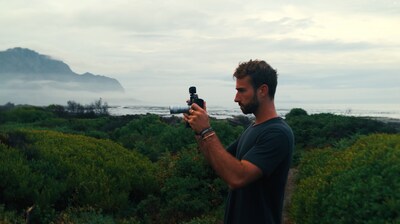
Redefining What a Camera Can Be
Traditional imaging tools often require careful framing, adjustment, and refinement to achieve perfection. At the heart of this collaboration is a shared vision: to empower creators with innovative tools like the vivo ZEISS Co-engineered Imaging System, which brings professional-grade imaging capabilities into the moment—bridging the gap between creativity and technology. As part of vivo's commitment to user-oriented innovation, X300 Ultra is designed with demanding creators in mind – supporting a cinematic-style workflow through the co-engineering of advanced optics with ZEISS, refined imaging algorithms, and system-level optimization, all built into a device that fits in your pocket.
A Filmmaker's Creative Vision, Uninterrupted
For those who follow his work, Sam Kolder's films have never really been about where he goes, but how it feels like being there. Blending travel, lifestyle and adventure into deeply personal narratives, his work is defined by fluid movement, intuitive transitions, and a quiet sense of presence within each frame. For this project, he arrived in South Africa with no traditional camera kit. Just his team, the open road, and a couple of X300 Ultra devices.
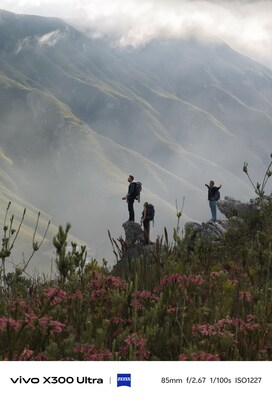
Setting aside his usual camera arsenal entirely, the assignment became a creative experiment as much as a production. "I thought leaving my cameras behind would make the job harder. It ended up being a liberation. Stripping away the technical barriers let me be fully present with my friends and the raw beauty of this place," said Kolder.
The film moves through the Garden Route the way Kolder experiences it – not as a sequence of destinations, but as moments that unfold and disappear just as quickly. Ancient cliff faces and crashing coastlines, kelp forests and stretches of quiet savannah, wildlife undisturbed and landscapes that feel unchanged by time. The intent was not to explain this land, but to inhabit it – transforming fleeting, unscripted moments into a cinematic work that feels less like it was produced, and more like it was lived.

No Heavy Setups. No Distance from the Moment.
What enabled this approach was X300 Ultra's ability to support a cinema‑style workflow in a single device – minimizing weight, setup time, and interruption compared to professional camera systems. Kolder noted the natural bokeh rendered by ZEISS Triple Prime Lenses, while both telephoto extenders proved to be a key creative asset – delivering background separation and subject isolation that approach what Kolder is used to achieving with his DSLR setups, while maintaining consistent quality across focal lengths. The device also demonstrated strong low-light performance, maintaining image clarity and minimizing noise in challenging lighting conditions.
With the core functionality inspired by a professional camera and Log recording built into the device, X300 Ultra delivered footage with the color depth and dynamic range suitable for professional color grading workflows – giving Kolder's team complete post-production flexibility from footage captured entirely in the field, on a single device. "It's the first time I've felt that a phone manufacturer has actually thought about what professional filmmakers need," said Kolder. "Everything we needed was in the box."
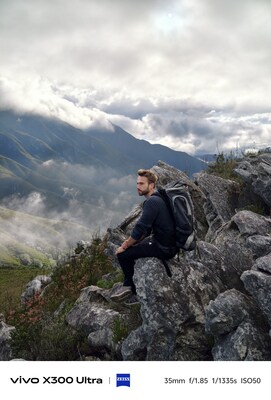
Cinematic Power in Your Pocket, Built for How Creators Actually Work
Prioritizing the complete creative workflow, X300 Ultra empowers storytelling by simplifying technical complexity, enabling creators to capture life as it happens, without compromise. Central to this capability is the industry-leading ZEISS Master Lenses Collection – a versatile, professional-grade imaging system that offers a set of prime focal lengths, including the 14 mm ZEISS Ultra Wide-Angle Camera, 35 mm ZEISS Documentary Camera, 85 mm ZEISS Gimbal-Grade APO Telephoto Camera. Telephoto reach is further extended with the 400 mm Equivalent vivo ZEISS Telephoto Extender Gen 2 Ultra or the 200 mm equivalent vivo ZEISS Telephoto Extender Gen 2, all of which were spotlighted throughout the film.
Beyond the optics, X300 Ultra gives filmmakers granular control over the entire video workflow. Features like Multi-Focal 4K 120 fps 10-bit Log Video, which provides the expansive dynamic range needed and deep color depth needed for professional color grading in post-production. The high-spec video capability is complemented by the All-New vivo Color Science, an end-to-end system that renders rich, layered depth recreating the feel of classic optics and delivering film-like color performance. The entire experience is brought together in the All-New Pro Video Mode, which presents a camera-grade user interface and supports real-time 3D LUT monitoring, allowing the crew to preview and focus on creative composition.
This cohesive software is matched by hardware built for the realities of filmmaking in motion. Advanced gimbal-level OIS ensures that handheld shots remain stable and composed, a crucial feature for the dynamic, on-the-go shooting style seen in the film. For creators focused on an HDR workflow, the device supports recording in Multi-Focal 4K 120 fps Dolby Vision Video, providing a streamlined path for creating vibrant, high-dynamic range footage. The professional ecosystem is completed by the vivo SmallRig Pro Video Rig Kit, a toolkit that offers superior stability and accessory mounting options, transforming X300 Ultra into a fully integrated pro-grade tool.
Because the most powerful stories aren't staged – they're happening all around us. This collaboration with Sam Kolder marks a shift in cinematic storytelling, beyond technical innovation. When technology no longer stands between the creator and the experience, what remains are the things that have always mattered most – the people, the places, and the moments worth holding onto. With vivo X300 Ultra, cinema doesn't just fit in your pocket; it puts you back in the moment.
Watch the film here: https://www.youtube.com/watch?v=oc0z9bQGwkY
About vivo
vivo is a technology company that creates great products based on a user-oriented value, with smart devices and intelligent services as its core. The company aims to build a bridge between humans and the digital world. Through unique creativity, vivo provides users with an increasingly convenient mobile and digital life. Following the company's core values, which include Benfen*, user-orientation, design-driven value, continuous learning, and team spirit, vivo has implemented a sustainable development strategy with the vision of developing into a healthier, more sustainable world-class corporation.
While bringing together and developing the best local talents to deliver excellence, vivo is supported by a network of R&D centers in Shenzhen, Dongguan, Nanjing, Beijing, Hangzhou, Shanghai, Xi'an and more cities, focusing on the development of state-of-the-art consumer technologies, including 5G, artificial intelligence, industrial design, imaging system and other up-and-coming technologies. vivo has also set up an intelligent manufacturing network (including those authorized by vivo), with an annual production capacity of nearly 200 million smartphones. As of now, vivo has branched out its sales network across more than 60 countries and regions and is loved by more than 500 million users worldwide.
*"Benfen" is a term describing the attitude on doing the right things and doing things right – which is the ideal description of vivo's mission to create value for society.
Stay informed of latest vivo news at https://www.vivo.com/en/about-vivo/news
Photo - https://mma.prnewswire.com/media/2979205/Sam_Kolder_x_vivo_X300_Ultra.jpg
Photo - https://mma.prnewswire.com/media/2979207/IMG_20260121_005257.jpg
Photo - https://mma.prnewswire.com/media/2979206/IMG_20260401_183403.jpg
Photo - https://mma.prnewswire.com/media/2979208/IMG_20260401_183902.jpg
 View original content:https://www.prnewswire.co.uk/news-releases/vivo-x-sam-kolder-a-cinematic-journey-across-the-landscape-of-south-africa-with-x300-ultra-302772112.html

Der Bundesrat verschärft im Streit um das Frühfranzösisch den Ton und greift zu einem bundesrechtlichen Instrument. Alle Primarschülerinnen und Primarschüler in der Schweiz sollen künftig zwingend eine zweite Landessprache lernen. Um dieses Ziel durchzusetzen, hat die Landesregierung eine Revision des Sprachengesetzes in die Vernehmlassung geschickt. Sie reagiert damit auf Vorstösse in mehreren deutschsprachigen Kantonen, Französisch aus den Stundenplänen der Primarschule zu streichen.
Im Zentrum steht die Frage, welche Rolle die Landessprachen im obligatorischen Unterricht spielen sollen. Für den Bundesrat ist dies eine «Frage von nationaler Bedeutung». Die Bundesverfassung verpflichte Bund und Kantone gemeinsam, die Landessprachen zu erhalten, die Verständigung zwischen den Sprachgemeinschaften zu stärken und nationale Minderheiten zu schützen, hält die Regierung fest. Der Bund sehe sich damit in der Verantwortung, den Zusammenhalt zwischen den Sprachregionen und den Respekt vor der sprachlichen Vielfalt zu sichern, während die Kantone ihr Schulwesen so zu harmonisieren hätten, dass Qualität und Durchlässigkeit des Bildungsraums Schweiz gewahrt bleiben.
Der Konflikt entzündet sich an der 2004 beschlossenen Sprachenstrategie der Kantone, die 2009 im HarmoS-Konkordat verankert wurde. Diese sieht vor, dass Kinder in der Primarschule zwei Fremdsprachen erlernen – darunter eine zweite Landessprache. In einzelnen Kantonen gibt es inzwischen Bestrebungen, den Unterricht einer Landessprache als Fremdsprache auf der Primarstufe zu streichen. Das widerspreche der gemeinsamen Strategie, schreibt der Bundesrat und zeigt sich über diese Entwicklung «beunruhigt».
Um gegenzusteuern, legt die Regierung zwei Varianten für eine Gesetzesänderung vor. Die erste folgt dem HarmoS-Modell: In der Primarschule sollen obligatorisch zwei Fremdsprachen unterrichtet werden, eine Landessprache und Englisch. Damit würde die heutige Praxis in den 15 HarmoS-Kantonen bundesrechtlich abgesichert und für alle gelten, sollte es nötig werden. Die zweite Variante lässt den Kantonen mehr Spielraum: Sie verpflichtet lediglich dazu, dass eine zweite Landessprache spätestens ab der Primarschule und durchgehend bis zum Ende der obligatorischen Schulzeit unterrichtet wird, ohne Englisch explizit als zweite Fremdsprache vorzuschreiben.
Mit der Revision will der Bundesrat den Rahmen abstecken für den Fall, dass die Kantone ihre Sprachenstrategie ganz oder teilweise aufgeben. Konkrete Entscheide sind noch offen: Zunächst läuft bis zum 5. Oktober 2026 eine Vernehmlassung, in der Kantone, Parteien und weitere Akteure Stellung beziehen können. Erst danach wird sich zeigen, ob sich das strengere HarmoS-Modell oder die flexibelere Lösung durchsetzt – und wie viel Gewicht der Bund seiner sprachpolitischen Rolle im Schulbereich tatsächlich geben will.