Humour-led campaign invites men to share the nickname they use for their penis to spark conversations about penile cancer
LONDON, March 12, 2026 /PRNewswire/ -- New polling of UK men1 for The Urology Foundation, reveals that while around 80% of UK men have a nickname for their penis, only 1 in 10 have heard of penile cancer and its symptoms.
The #NameIt campaign aims to tackle this gap by breaking one of the last remaining intimate health taboos and encouraging men to talk more openly about changes to their penis. Greater awareness and earlier conversations can help men recognise potential warning signs sooner, when treatment is most effective.
Sir Stephen Fry, Ambassador of The Urology Foundation, is proud to back the campaign and has released a video of support stating: "From 'Girth Vader' to 'John Thomas' and 'My Little Friend', the list of nicknames men have for their penis goes on. Yet while around 80% of men have a nickname, only 10% have heard of penile cancer and its symptoms. Know what's normal for you, check regularly, and if you spot something, speak to your doctor. Name it. Tackle it today."
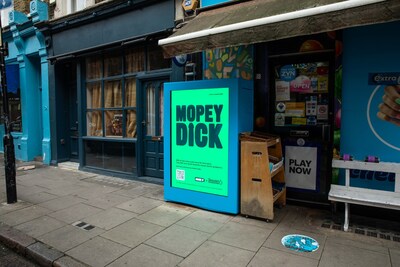
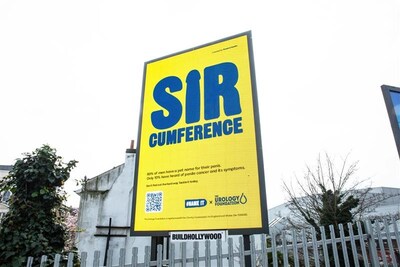
Running across OOH sites, digital channels and social platforms throughout March, the campaign uses humour-led creative to overcome embarrassment, a key barrier preventing many men from discussing intimate symptoms or seeking help.
Penile cancer is rare but rising, with more than 760 men diagnosed in the UK each year. Most cases are seen in men aged over 50 but an increasing number of younger people are now being diagnosed and should be aware of the signs and symptoms.
This bold, cheeky campaign leverages new insight to cut through stigma and drive early action and awareness around a disease where delays can have serious consequences. The campaign site includes an online Pecker Checker, designed to help men recognise what's normal, understand warning signs, and know when to speak to a GP, and a name generator for those in the 20% who haven't got a nickname.
Rebecca Porta, Chief Executive of The Urology Foundation, said, "Our survey highlights that many men can name and talk humorously about their penis, but far fewer know about penile cancer. Penile cancer is rare, but an early diagnosis can significantly improve patient outcomes. Knowing what is normal for you and acting on changes quickly can make a huge difference. We are choosing to speak openly because this is a little-known cancer that urgently needs to be on people's radar. We've heard from experts, patients and their families for many years about the need for greater awareness of penile cancer and we're using this campaign to kick-start real conversations among men. We needed a bold, creative campaign that cuts through taboo and meets men where they already are; using humour and familiarity to start a conversation about something very serious."
The charity hopes that this bold and creative campaign will grab men's attention and get the nation talking about penile health, recognise that penile cancer exists and get to know what's normal for them.
Ref: Survey of 2000 males aged 18+ in the UK carried out by One Poll on behalf of The Urology Foundation, 29 January 2026 – 4 February 2026.
For more information please contact lthorne@theurologyfoundation.org or call 07725031880
Notes to editor
Campaign details
About penile cancer
Find more information here: https://www.theurologyfoundation.org/urology-health/male-reproductive-organs-conditions/cancer-of-the-penis-penile-cancer/
About The Urology Foundation
As the UK's only charity representing all urology diseases including prostate, bladder kidney, penile and testicular cancers and non-malignant conditions such as incontinence, erectile dysfunction, urinary tract infections and kidney stones, our vision is for everyone to benefit from excellent urology health. We are revolutionising urology care for the benefit of those living with a urology condition and their families. We do this in three ways:
The Urology Foundation can offer journalists:

Video - https://mma.prnewswire.com/media/2931841/NameIt_campaign_video.mp4
Video - https://mma.prnewswire.com/media/2931842/The_Urology_Foundation_ambassador_Sir_Stephen_Fry_shares_his_message.mp4
Photo - https://mma.prnewswire.com/media/2931837/The_Urology_Foundation.jpg
Photo - https://mma.prnewswire.com/media/2931838/ShepherdsBushRoundabout_BUILDHOLLYWOOD.jpg
Photo - https://mma.prnewswire.com/media/2931839/LeonardStreet_BUILDHOLLYWOOD.jpg
Photo - https://mma.prnewswire.com/media/2931840/Avalere_Health.jpg


Die europäischen Aktienmärkte haben zur Wochenmitte ihre kurze Erholungsphase beendet und sind erneut ins Minus gedreht. Auslöser ist nach Einschätzung von Marktbeobachtern vor allem die wachsende Unsicherheit im Nahen Osten, die über die Energiepreise zunehmend als Belastungsfaktor für die Weltwirtschaft wahrgenommen wird. "Die Situation im Nahen Osten führt über die Energiepreise zu massiven Beeinträchtigungen der Weltwirtschaft", sagte Andreas Lipkow, Marktanalyst beim Broker CMC Markets. Das größte Problem bleibe die Unsicherheit; mögliche Stützungsmaßnahmen wie die Freigabe strategischer Ölreserven verpufften deshalb rasch.
Der Eurozonen-Leitindex EuroStoxx 50 verlor im Verlauf rund ein halbes bis knapp ein Prozent und lag je nach Messzeitpunkt zwischen etwa 0,56 Prozent und 0,73 Prozent im Minus. Auch die Leitindizes außerhalb der Währungsunion gaben nach: Der britische FTSE 100 sank um rund 0,6 bis 0,8 Prozent, der Schweizer SMI um etwa 0,7 bis 0,8 Prozent. Die gleichgerichteten Rückgänge an den großen Handelsplätzen in Paris, London und Zürich spiegeln die zunehmende Risikoaversion der Anleger wider.
Gleichzeitig verlagerten Investoren ihr Kapital in vermeintliche Profiteure höherer Energiepreise. Ölwerte zählten europaweit zu den Stützen des Marktes. Die Notierungen für Rohöl drehten nach zwei schwächeren Handelstagen wieder nach oben, angetrieben von der Sorge, dass es zu längeren Unterbrechungen der Öllieferungen durch die strategisch wichtige Straße von Hormus im Persischen Golf kommen könnte. Damit scheint der Preisrückgang, der am Montag eingesetzt und sich am Dienstag fortgesetzt hatte, vorerst gestoppt. Dagegen litten besonders Branchen, deren Kostenstrukturen empfindlich auf steigende Energie- und Treibstoffpreise reagieren. Fluggesellschaften wurden von den deutlich höheren Kerosinpreisen belastet, und auch Logistiker sowie Chemieunternehmen gerieten unter Druck. Zinssensitive Immobilienwerte standen zusätzlich wegen fortbestehender Inflations- und Zinsängste auf den Verkaufslisten.
Relativ robust präsentierte sich der europäische Einzelhandelssektor. Unterstützt wurde er vom Schwergewicht Inditex, dessen Aktien zulegten und damit dem Marktsegment Stabilität verliehen. Der spanische Textilhändler hatte im Geschäftsjahr 2025/26 etwas besser verdient als erwartet; laut Analysten entwickelte sich zudem der Start in das laufende Jahr im Februar und Anfang März über den Prognosen. Beobachter verweisen darauf, dass die Bewertung der Aktie als attraktiv gilt und den Papieren in dem nervösen Marktumfeld eine gewisse Stütze bietet. In London dagegen gerieten die Anteilscheine des Versicherers und Vermögensverwalters Legal & General deutlich unter Druck und zählten mit einem Kursabschlag im hohen einstelligen Prozentbereich zu den größten Verlierern im FTSE 100.

 View original content: