Proof of authentication combines quality assurance with end-to-end traceability aiming to comply with incoming EU regulations
ZURICH, June 9, 2026 /PRNewswire/ -- The Hashgraph Group (THG) today announced a strategic collaboration with science and technology company Merck, that extends its TrackTraceDigital Product Passport (DPP) platform. Built on Hedera and designed to support compliance requirements for the global supply chain industry, the collaboration aims to meet the EU's incoming product transparency regulations, ensuring product trust, quality, and improved sustainability. This integration of digital and physical authentication technologies is an initiative enabled through Merck's participation in the Enterprise Accelerator Program of The Hashgraph Association (THA), the Swiss-based non-profit advancing digital enablement, innovation, and education across the Hedera ecosystem.
The technical integration brings together THG's Hedera-powered digital traceability infrastructure with Merck's M-Trust™ physical authentication technology system, offering the global supply chain ecosystem of physical goods a single trust system for proof of quality, proof of traceability, proof of authenticity, and proof of value transfer, all supported digitally by product passport, with Hedera as single source of truth.
Where TrackTrace creates tamper-proof digital records of a product's origin and lifecycle, Merck's M-Trust™ technology adds something digital systems alone cannot deliver: verification that the consumer product in your mouth is the real thing, not a counterfeit.
The integrated solution - already demonstrated in a first working supply chain pilot to be announced soon - is designed to help businesses across any sector prepare for the EU Digital Product Passport and deforestation traceability requirements now taking effect.
Regulation is raising the bar
New EU regulations are tightening up what companies must prove about the products they sell. The Ecodesign for Sustainable Products Regulation (ESPR) will require Digital Product Passports via QR code detailing a product's origin, composition, sustainability credentials and lifecycle from 2026 onwards, whereas the EU Deforestation Regulation (EUDR) requires importers of commodities including cocoa, coffee, and timber to provide verified, farm-level traceability data. The collaboration between THG and Merck is designed to support the entire supply value chain in meeting applicable regulatory compliance requirements, with traceability and authentication built into the trust system.
Reliable product traceability also underpins sustainability commitments, ethical sourcing, carbon reporting, and consumer trust. Companies making public promises about where their products come from increasingly need the infrastructure to back those claims with verifiable proof. The consequences of weak traceability are already visible. In 2026, cocoa and food fraud risks have been rising due to high prices and strict new regulations, leading to increased adulteration and fake sourcing documentation. Key frauds include blending low-quality cocoa with fillers like husks, and falsifying deforestation-free certificates to meet the EU Deforestation Regulation (EUDR).
How it works
Merck embeds invisible security markers directly into a product and packaging using patented pigment technology. When scanned with an M-Trust™ handheld device, the product's physical authenticity is confirmed, cryptographically signed, and recorded within TrackTrace on the Hedera network - becoming a permanent, verifiable part of its Digital Product Passport. The result: a chain of proof connecting the actual product to every claim made about it.
TrackTrace complements M-Trust™ by providing real-time tracking of origin, ethical sourcing, and carbon emissions data. TrackTrace also supports quality assurance (QA) data, enabling the capture and integration of product quality metrics directly into the Digital Product Passport. Each instance of tracked process is issued with its own decentralized identifier, acting as an immutable and verifiable record that aggregates all data, credentials, and validations, which allows any authorized third party to independently audit a product, business process, or claim without relying on a central authority, while supporting the automation of reporting processes through integrated Agentic AI.
The combined architecture is built to work across any sector where product authenticity, provenance, and regulatory compliance are non-negotiable – from foods to pharmaceuticals and luxury goods to electronics and industrial components.
"Digital records alone are not sufficient for high-stakes supply chains," said Stefan Deiss, CEO and Co-Founder of The Hashgraph Group. "Enterprises need to prove the physical product is genuine, not just the paperwork. This unique integration with M-Trust covers all layers from the first mile to the last mile – physical authentication through Merck's technology and digital verification through TrackTrace - creating the foundation for trusted Digital Product Passports across any industry."
"Product authentication has always required bridging the physical and digital worlds," said Dr. Thomas Endress, Executive Director, Head of M-Trust in Group Science & Technology Office of Merck. "Integrating M-Trust's verification with TrackTrace's digital traceability creates exactly the kind of end-to-end trust infrastructure that enterprises and regulators are asking for. This is what product authentication looks like when it is built for the scale and complexity of modern supply chains."
Building momentum
The Merck and THG collaboration is the latest in a rapid sequence of milestones for The Hashgraph Group. Since launching its IDTrust self-sovereign identity platform in August 2025, followed by its EcoGuard carbon credit platform in December 2025 - now deployed with government institutions in both India and the Philippines and more recently the launch of its BrandBoost product in May 2026, THG has moved to establish and position Hedera-based infrastructure as a serious option for enterprises and governments navigating complex regulatory environments. With EU Digital Product Passport deadlines approaching and global demand for verifiable supply chain and sustainability data intensifying, THG is positioning its enterprise Web3 suite of products for further integrations and sector-specific deployments throughout 2026, and beyond.
About The Hashgraph Group
The Hashgraph Group (THG) is a Swiss-based Web3 and AI technology engineering company operating within the Hedera ecosystem. Specialized in the design, development, and deployment of enterprise-grade solutions on Hedera, THG is focused on building business without barriers by converging agentic intelligence and workflow automation with decentralization and trusted data infrastructure, enabling sustainable competitive advantage for its clients in the digital economy. For more information about THG, visit www.hashgraph-group.com.
 View original content:https://www.prnewswire.co.uk/news-releases/the-hashgraph-group-and-merck-introduce-eu-digital-product-passport-on-hedera-for-regulated-supply-chains-302795017.html

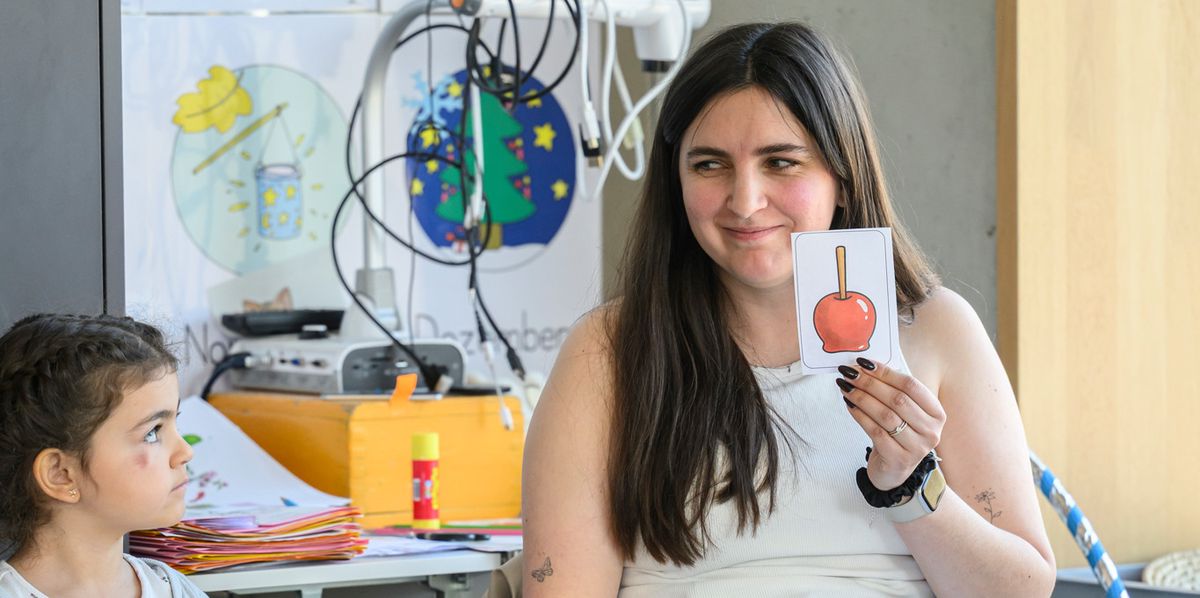
Der Bundesrat verschärft im Streit um das Frühfranzösisch den Ton und greift zu einem bundesrechtlichen Instrument. Alle Primarschülerinnen und Primarschüler in der Schweiz sollen künftig zwingend eine zweite Landessprache lernen. Um dieses Ziel durchzusetzen, hat die Landesregierung eine Revision des Sprachengesetzes in die Vernehmlassung geschickt. Sie reagiert damit auf Vorstösse in mehreren deutschsprachigen Kantonen, Französisch aus den Stundenplänen der Primarschule zu streichen.
Im Zentrum steht die Frage, welche Rolle die Landessprachen im obligatorischen Unterricht spielen sollen. Für den Bundesrat ist dies eine «Frage von nationaler Bedeutung». Die Bundesverfassung verpflichte Bund und Kantone gemeinsam, die Landessprachen zu erhalten, die Verständigung zwischen den Sprachgemeinschaften zu stärken und nationale Minderheiten zu schützen, hält die Regierung fest. Der Bund sehe sich damit in der Verantwortung, den Zusammenhalt zwischen den Sprachregionen und den Respekt vor der sprachlichen Vielfalt zu sichern, während die Kantone ihr Schulwesen so zu harmonisieren hätten, dass Qualität und Durchlässigkeit des Bildungsraums Schweiz gewahrt bleiben.
Der Konflikt entzündet sich an der 2004 beschlossenen Sprachenstrategie der Kantone, die 2009 im HarmoS-Konkordat verankert wurde. Diese sieht vor, dass Kinder in der Primarschule zwei Fremdsprachen erlernen – darunter eine zweite Landessprache. In einzelnen Kantonen gibt es inzwischen Bestrebungen, den Unterricht einer Landessprache als Fremdsprache auf der Primarstufe zu streichen. Das widerspreche der gemeinsamen Strategie, schreibt der Bundesrat und zeigt sich über diese Entwicklung «beunruhigt».
Um gegenzusteuern, legt die Regierung zwei Varianten für eine Gesetzesänderung vor. Die erste folgt dem HarmoS-Modell: In der Primarschule sollen obligatorisch zwei Fremdsprachen unterrichtet werden, eine Landessprache und Englisch. Damit würde die heutige Praxis in den 15 HarmoS-Kantonen bundesrechtlich abgesichert und für alle gelten, sollte es nötig werden. Die zweite Variante lässt den Kantonen mehr Spielraum: Sie verpflichtet lediglich dazu, dass eine zweite Landessprache spätestens ab der Primarschule und durchgehend bis zum Ende der obligatorischen Schulzeit unterrichtet wird, ohne Englisch explizit als zweite Fremdsprache vorzuschreiben.
Mit der Revision will der Bundesrat den Rahmen abstecken für den Fall, dass die Kantone ihre Sprachenstrategie ganz oder teilweise aufgeben. Konkrete Entscheide sind noch offen: Zunächst läuft bis zum 5. Oktober 2026 eine Vernehmlassung, in der Kantone, Parteien und weitere Akteure Stellung beziehen können. Erst danach wird sich zeigen, ob sich das strengere HarmoS-Modell oder die flexibelere Lösung durchsetzt – und wie viel Gewicht der Bund seiner sprachpolitischen Rolle im Schulbereich tatsächlich geben will.