SALT LAKE CITY, May 20, 2026 /PRNewswire/ -- The Church of Jesus Christ of Latter-day Saints announced today a $25 million commitment to UNICEF for the Child Nutrition Fund (CNF) – a contribution that will unlock an additional $25 million through the CNF Match Challenge, announced at the Nutrition for Growth Summit in March 2025.
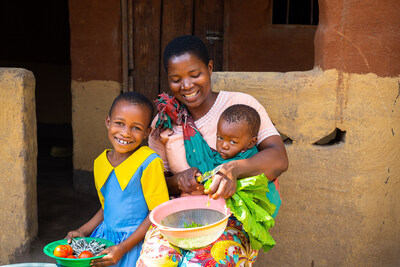
The combined $50 million will strengthen the CNF's efforts to reach 320 million children and women each year by 2030 with proven interventions, including maternal nutrition, breastfeeding and complementary feeding, micronutrient supplementation, and the early detection and treatment of wasting. The Church's contribution will support nutrition programs in the Democratic Republic of the Congo, Kenya, Nigeria, the Philippines, and Sierra Leone, delivering evidence-based interventions while strengthening government systems to ensure these essential services are sustainably provided to women and children with the greatest needs.
"We are grateful to work with UNICEF to improve the health and nutrition of women and children," said Presiding Bishop W. Christopher Waddell of The Church of Jesus Christ of Latter-day Saints. "Our long-standing work with UNICEF reflects shared values and a commitment to care for those in need around the world. The Church's efforts to care for those who are vulnerable are guided by the teachings of Jesus Christ to seek out and serve individuals."
Undernutrition contributes to nearly half of all child deaths worldwide, with 181 million children facing severe food poverty – lacking access to even the most basic nutritious diets. An estimated 150 million children are affected by stunting, a chronic form of malnutrition that results in impaired growth and development, while 43 million more are affected by wasting, a life-threatening form of malnutrition, where children lose critical mass of body fat and muscle.
The CNF is a UNICEF-led multi-donor financing mechanism designed to accelerate scaling-up of evidence-based, high-impact actions to tackle critical nutrition challenges, including stunting and wasting in children, and anemia in women, in the world's highest-need countries. By addressing both prevention and treatment, the CNF bridges critical gaps in nutrition services, ultimately saving lives and building resilience in vulnerable communities.
"UNICEF is grateful to The Church of Jesus Christ of Latter-day Saints for its long commitment to improving the lives of children, and for this generous contribution," said UNICEF Executive Director Catherine Russell. "It comes at a critical time and will help deliver lifesaving nutrition to millions of children and women who need it the most."
"Every child deserves a healthy start, and our multiyear focus on maternal and child nutrition is designed to invest directly in the future. By addressing these critical dietary shortages, we are empowering mothers to help their children reach their potential," said Camille N. Johnson, General President of the Relief Society of The Church of Jesus Christ of Latter-day Saints.
UNICEF does not endorse any company, brand, organization, product or service.
About The Church of Jesus Christ of Latter-day Saints
The humanitarian efforts of The Church of Jesus Christ of Latter-day Saints seek to relieve suffering, foster self-reliance and provide opportunities for service around the world. According to the Church's Caring for Those in Need: 2025 Report, these efforts included $1.58 billion in expenditures, 7.4 million hours of volunteer service, and 3,514 humanitarian projects in 196 countries and territories. Assistance is provided without regard to race, religion or nationality. Learn more at Caring.ChurchofJesusChrist.org.
About UNICEF USA
UNICEF USA advances the global mission of UNICEF by rallying the American public to support the world's most vulnerable children. Together, we are working toward a world that upholds the rights of all children and helps every child thrive. For more information visit unicefusa.org.
About the CNF
The Child Nutrition Fund is a UNICEF-led coordination and funding mechanism designed to accelerate the scale-up of sustainable policies, programmes and supplies to end child and maternal undernutrition in high-need countries.
For more information, visit: www.childnutritionfund.org

Photo - https://mma.prnewswire.com/media/2984407/The_Church_of_Jesus_Christ_of_Latter_day_Saints___house_in_Mukwala_Village.jpg
Photo - https://mma.prnewswire.com/media/2984408/The_Church_of_Jesus_Christ_of_Latter_day_Saints__Laveille_Kone__cuddling_her_6_month_old_baby_Koroto.jpg
 View original content:https://www.prnewswire.co.uk/news-releases/the-church-of-jesus-christ-of-latter-day-saints-commits-25-million-to-the-unicef-led-child-nutrition-fund-302777901.html

Die Schweizer Stimmberechtigten haben einer Verschärfung des Zivildienstgesetzes zugestimmt. Laut definitiven Ergebnissen votierten 52,5 Prozent für die Reform, rund 47,5 Prozent dagegen. Damit setzte sich der Kurs von Bundesrat und Parlament durch, den Zivildienst wieder klar als Ausnahme und nicht als gleichwertige Alternative zum obligatorischen Militärdienst zu definieren. Die Stimmbeteiligung lag mit rund 58 Prozent vergleichsweise hoch; 1'690'343 Personen legten ein Ja in die Urne, 1'531'878 stimmten Nein.
Das Ergebnis offenbart deutliche regionale Bruchlinien. Während viele deutschsprachige Kantone die Reform klar unterstützten – etwa Aargau mit 56,2 Prozent, St. Gallen mit 58,9 Prozent, Graubünden mit 59,3 Prozent und Luzern mit 56,9 Prozent Ja – fiel das Verdikt in der Romandie gespalten aus. Genf, Waadt, Neuenburg und Jura lehnten die Vorlage ab, mit Nein-Anteilen von bis zu gut 60 Prozent im Jura. Basel-Stadt stellte sich ebenfalls gegen die Verschärfung, und der Kanton Zürich kippte nach Auszählung der städtischen Stimmen knapp ins Nein-Lager. Demgegenüber sagten Wallis (57,1 Prozent), Freiburg (50,2 Prozent) und das Tessin (53,9 Prozent) Ja zur Reform.
Kern der Vorlage ist ein Paket von sechs Massnahmen, die den Wechsel aus der Armee in den Zivildienst deutlich unattraktiver machen sollen. Künftig müssen alle, die in den Zivildienst wechseln, mindestens 150 Diensttage leisten – unabhängig davon, wie viele Tage im Militär noch offen wären. Für Unteroffiziere und Offiziere gilt damit neu derselbe Umrechnungsfaktor von 1,5 Zivildiensttagen pro verbleibendem Militärdiensttag wie für einfache Soldaten. Wer alle Armee-Ausbildungstage bereits absolviert hat, kann künftig nicht mehr in den Zivildienst wechseln, um der Schiesspflicht zu entgehen.
Zusätzlich werden der zeitliche Rahmen und die Einsatzmöglichkeiten enger gezogen. Zivildienstleistende müssen ab dem Jahr nach ihrem ersten Einsatz jährlich Dienst leisten, bis alle vorgeschriebenen Tage erfüllt sind. Wer vor oder während der Rekrutenschule ein Gesuch stellt, muss den langen Anfangseinsatz von 180 Tagen bereits im Jahr nach der Zulassung absolvieren. Einsätze, die ein begonnenes Medizinstudium voraussetzen, werden gestrichen – offiziell, weil der Armee medizinisches Personal fehlt. Bürgerliche Parteien werteten das Ja als Bestätigung, dass der Zivildienst eine Ausnahme bleiben solle; die links-grüne Nein-Allianz verweist angesichts des knappen Resultats auf die breite gesellschaftliche Unterstützung für den Zivildienst und kündigt an, weitere Verschärfungen bekämpfen zu wollen.