STOCKHOLM, July 27, 2026 /PRNewswire/ -- The largest battery energy storage system (BESS) project in the Nordics in Ånge, Sweden has now been taken into commercial operation. Sungrow, a global leader in battery storage and PV inverters, delivered its utility BESS PowerTitan 2.0 for the 70 MW / 160 MWh battery system developed by Delta Capacity. Designed to deliver high reliability and efficiency, the system is built to operate under challenging Nordic weather conditions and extreme temperature variations.
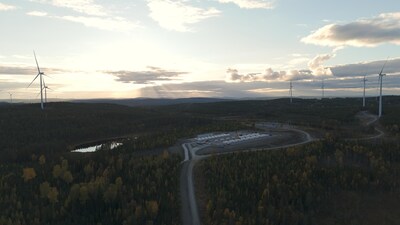
The Ånge BESS will contribute to balancing Sweden's power system, offering rapid response capabilities and capacity for both frequency regulation and arbitrage across the volatile Nordic power market. Sweden's battery storage market is expanding rapidly as the country's energy transition accelerates. The regulatory framework has enabled battery storage to participate in balancing markets, turning it into a revenue-generating asset, according to a report from SolarPower Europe. Sweden and Finland together installed more than 1 GWh of new battery capacity in 2025[1].
"Ånge is a great example of how large-scale energy storage is built in practice. Fast, at the right scale, and with the right partners like Delta Capacity. Our role is to be a long-term partner and contribute to expanding renewable energy capacity in Sweden," says Samer Nameer, Country Manager Sweden at Sungrow.
Fast deployment for the Nordic energy transition
The Ånge project is owned by a joint venture between WOOD & Company Renewables Sub-Fund and Delta Capacity, which has led the project from design to completion. From procurement start to commercial operation took 15 months. The facility is located in bidding zone SE2 and contributes to balancing the Swedish power system.
Patrik Hes, CEO of Delta Capacity: "The Nordic energy transition is moving fast and requires infrastructure that keeps the same pace. Sweden has great renewable resources, but flexibility is missing and that is exactly what Ånge provides. 160 MWh of storage, delivered in 15 months. Delta Capacity's goal is to keep building faster and at a greater scale. The energy transition cannot wait."
The project was acquired from RES in February 2025. Other suppliers in the project are Stenger & Ibsen Construction, Rejlers, Green Power Monitor, Solvina and Ellevio. Centrica Energy manages the buying and selling of electricity for the facility around the clock.
Local presence with a global footprint
Sungrow Europe currently has 25 local offices, two research and development centres and 26 warehouses across Europe. The Swedish team with dedicated experts for Services, and energy solutions is based in Stockholm, with other Scandinavian offices in Malmö, Copenhagen and Helsinki. Among its most recent projects in the Nordic region are the Nordic region's largest solar roof in Sweden[2] (14 MW) and the northernmost solar project in Finland[3] (70 MW)."
About Sungrow
Sungrow, a global leader in renewable energy technology, has pioneered sustainable power solutions for over 29 years. As of Dec 2025, Sungrow has installed over 1000 GW of power electronic converters worldwide. The company is recognized as the world's most bankable PV inverter and energy storage company (BloombergNEF). Its innovations power clean energy projects across the globe, supported by a network of 520 service outlets guaranteeing excellent customer experiences. At Sungrow, we're committed to bridging to a sustainable future through cutting-edge technology and unparalleled service. For more information, please visit: www.sungrowpower.com/en
About Delta Capacity
Founded in 2022, Swiss-based Delta Capacity is driven by its vision to develop, acquire, and own and operate utility-scale battery storage across Europe. The company is scaling quickly while maintaining a consistent focus on asset quality—prioritizing designs that support high availability, efficient performance, and bankable operating outcomes. The rapidly growing team brings decades of experience across large infrastructure, renewable energy, energy trading, and software development. Delta Capacity currently has nearly 800 MWh under construction and targets the build-out, commissioning, and operation of more than 6 GWh of flexible assets by 2030.
Photo - https://mma.prnewswire.com/media/3007864/Sungrow_Delta_AngeBESS.jpg
Logo - https://mma.prnewswire.com/media/1344575/Logo.jpg
 View original content:https://www.prnewswire.co.uk/news-releases/sungrow-powers-the-nordics-largest-commissioned-bess-project-in-sweden-with-powertitan-2-302835061.html

Die Einigung zwischen den USA und dem Iran auf ein Rahmenabkommen zur Beendigung des Iran-Kriegs sorgt in der Handelsschifffahrt für vorsichtige Erleichterung. Besonders im Fokus steht die Straße von Hormus, eine der wichtigsten Seepassagen für den weltweiten Öl- und Flüssiggas-Handel. Seit Beginn des Konflikts Ende Februar ist die Meerenge weitgehend blockiert, zahlreiche Handelsschiffe sitzen im Persischen Golf fest. Nun soll die Passage nach der geplanten Unterzeichnung des Abkommens wieder geöffnet werden.
US-Präsident Donald Trump kündigte an, dass die Straße von Hormus nach dem Abschluss der Vereinbarung wieder für den Verkehr freigegeben werden solle. Die Unterzeichnung ist für Freitag in Genf vorgesehen. Für die deutsche Handelsschifffahrt wäre dies ein entscheidender Schritt zur Normalisierung. „Die Signale aus den Gesprächen zwischen den USA und dem Iran machen auch der Schifffahrt Hoffnung“, sagte Martin Kröger, Hauptgeschäftsführer des Verbands Deutscher Reeder (VDR). Zugleich mahnte er, es müsse sich erst zeigen, ob die Passage dauerhaft sicher befahrbar sein werde. Man sei „vorsichtig optimistisch“.
Die Branche hat allen Grund, auf rasche Entspannung zu hoffen. Nach Angaben des VDR sitzen aktuell noch 46 Schiffe deutscher Reedereien mit rund 1.000 Seeleuten im Persischen Golf fest. Die Blockade der Meerenge trifft nicht nur die Reedereien, sondern bremst den globalen Energiehandel. Die UN-Sonderorganisation für Seeschifffahrt (IMO) begrüßte die Einigung ausdrücklich. Seit Ausbruch des Konflikts wurden der IMO zufolge 46 Angriffe auf Handelsschiffe in der Region bestätigt, bei denen 14 Seeleute ums Leben kamen.
Trotz der diplomatischen Fortschritte sehen Branchenverbände die Lage in der Region weiter kritisch. Der internationale Schifffahrtsverband Bimco bewertet die Sicherheitslage in der Straße von Hormus auch nach Bekanntwerden des Rahmenabkommens als instabil. Eine Durchfahrt bleibe sehr riskant, heißt es aus dem Verband. Für Reeder und Charterer stellt sich damit die Frage, wie schnell und in welchem Umfang sie ihre Routen wieder über die Meerenge führen können – oder ob Ausweichrouten zumindest mittelfristig bestehen bleiben müssen.
Für den Moment überwiegt in der Schifffahrt die Hoffnung, dass die geplante Vereinbarung in Genf die Voraussetzungen für eine nachhaltige Entspannung an einem der neuralgischsten Punkte des globalen Seehandels schafft. Ob und wie schnell sich die Zahl der festliegenden Schiffe reduziert und sich die Risikoeinschätzungen der Versicherer und Verbände anpassen, dürfte entscheidend dafür sein, wann sich der Verkehr durch die Straße von Hormus wieder weitgehend normalisiert.