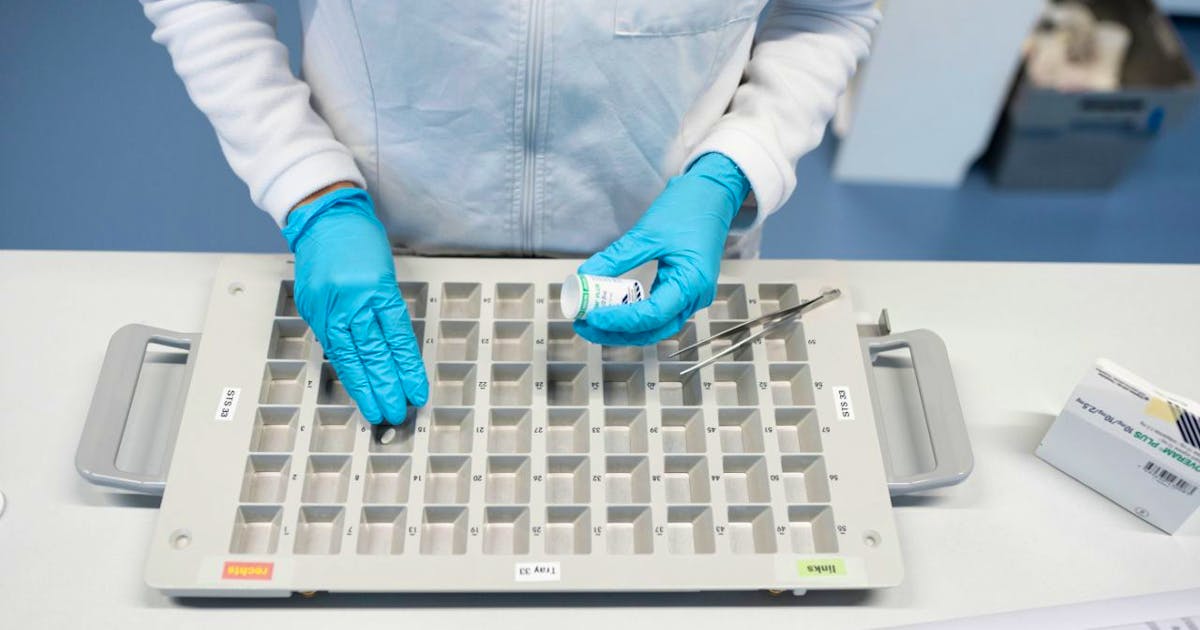
Medium-term plan emphasizes "Trusted Growth", "GEMBA DX", and portfolio restructuring, positioning Europe as one of the focus regions in OMRON's global transformation strategy.
KYOTO, Japan, March 11, 2026 /PRNewswire/ -- OMRON Corporation (TSE: 6645), recently announced its medium-term roadmap, Shaping the Future 2030 (SF2030) 2nd Stage, outlining a strategic path to return to sustainable growth led by devices and transform into a data-driven "GEMBA DX (on-site digital transformation) company." Covering the period through 2030, the plan combines offensive investments in 13 focus businesses with defensive structural reforms to rebuild the company's portfolio and strengthen execution capability.
"Trusted Growth reflects our strong desire to deepen the relationship of trust with our customers and once again achieve strong growth in order to transform ourselves into GEMBA DX company," said Junta Tsujinaga, President & CEO, OMRON Corporation. "GEMBA DX fuses and multiplies high-quality data obtained from devices, which is one of OMRON's strengths, with other data from the field, utilizing knowledge to convert this data into something of value. We aim to use this data to provide data services that solve our clients' essential problems."
Key Strategic Pillars of SF2030 2nd Stage
Europe as a Focus Region
As per Fernando Colás, CEO, OMRON Industrial Automation Europe, "UK manufacturers are under increasing pressure to improve productivity while managing skilled labour shortages and operational complexity. By combining our automation technologies with strong local expertise, we help customers move from fragmented automation toward more autonomous and efficient operations, in a practical, scalable way."
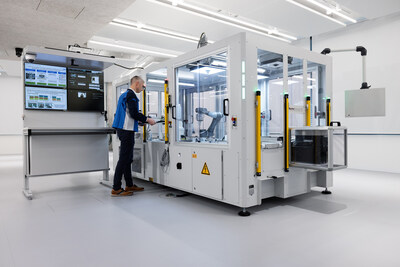
OMRON is reinforcing its support for UK manufacturers through local expertise and education services. By combining application engineering, training programs, and on-site support, OMRON helps customers strengthen internal capabilities and adopt automation technologies that address skills gaps, while implementing scalable automation solutions more effectively.
The company also aims to recover and expand its share among machine builders in strategic markets such as Italy and Spain by offering various devices and tailored automation solutions.
Photo - https://mma.prnewswire.com/media/2930241/OMRON_DE_and_UK_Image.jpg
Logo - https://mma.prnewswire.com/media/2803499/5855560/OMRON_Logo.jpg
 View original content:https://www.prnewswire.co.uk/news-releases/omron-charts-data-driven-path-to-2030-for-european-business-302710488.html


Die Schweizer Genossenschaft Migros Zürich (GMZ) hat ihren vollständigen Rückzug aus dem deutschen Markt bekannt gegeben. Nach einer strategischen Neubeurteilung verkauft das Unternehmen die Supermarktkette Tegut, die es seit 2013 besaß. Ein wesentlicher Teil der vor allem in Hessen angesiedelten Filialen soll von Edeka übernommen werden, wie beide Unternehmen bestätigten.
Als Grund für den Rückzug nennt Migros das verschärfte Marktumfeld im deutschen Lebensmitteleinzelhandel. Trotz massiver Kosteneinsparungen und einer Halbierung der operativen Verluste im vergangenen Jahr sei Tegut mit seiner spezifischen Positionierung und vergleichsweise kleinen Unternehmensgröße langfristig nicht zukunftsfähig gewesen. Die Option einer Gesamtübernahme durch einen einzelnen Käufer habe sich als nicht umsetzbar erwiesen.
Edeka plant, rund 200 Tegut-Filialen in den genossenschaftlichen Edeka-Verbund zu integrieren. Markus Mosa, Vorstandsvorsitzender der Edeka-Zentrale, betonte, dass diese Einigung eine klare Zukunftsperspektive für die Tegut-Märkte und ihre Mitarbeiter schaffe. Durch die Schließung zahlreicher Standorte hätte ansonsten der Verlust von mehr als 4.500 Arbeitsplätzen gedroht. Ob der Name Tegut erhalten bleibt, ist derzeit noch unklar.
Der Verkauf bedarf noch der Zustimmung des Kartellamts. Angaben zum Kaufpreis wurden nicht gemacht. Für die übrigen Tegut-Märkte, die nicht von Edeka übernommen werden, laufen laut Migros Gespräche mit weiteren Interessenten. Die 1947 in Fulda gegründete Kette beschäftigt nach eigenen Angaben mehrere tausend Mitarbeiter und wird nun nach neun Jahren unter Schweizer Eigentümerschaft einen neuen Eigentümer erhalten.