LONDON, May 18, 2026 /PRNewswire/ -- Markel Insurance, the insurance operation within Markel Group Inc. (NYSE:MKL), today announced the appointment of Sebastian Rice to Head of Global Development – Trade Credit, effective immediately.
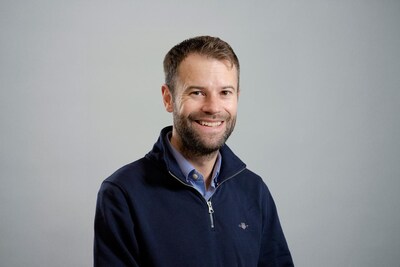
Reporting to Phil Amlot, Global Head of Trade Credit – International, Rice will work closely with him to drive innovative, solution-led underwriting and develop bespoke offerings that respond to evolving market conditions and client needs across Markel's global hubs. His role will include supporting clients navigating an increasingly complex trade environment shaped by geopolitical uncertainty, supply chain disruption and shifting credit risks.
Rice will also co-ordinate a global cohort of Trade Credit underwriters across Markel's offices in New York, Singapore, Dubai and London to align with our key partner relationships. He'll focus on business development and driving further profitable growth across the UK and Europe, with an emphasis on delivering greater capacity, tailored solutions and enhanced service for brokers and clients.
Since joining Markel two years ago, Rice has played a key role in developing new solutions, including Markel's Non-Cancellable Limits offering, which enables clients to operate with greater certainty in the event of non-payment. In his new role, he'll build on this momentum to further strengthen Markel's position as a trade credit insurer of choice for multinational businesses.
Commenting on the appointment, Amlot said: "Markel International's success and sustained growth are driven by colleagues like Seb, who are committed to working alongside our clients to deliver tailored solutions. He takes the time to understand client needs and responds with precision, rather than offering a one-size-fits-all approach.
With demand for trade credit insurance at record levels and underwriting conditions becoming increasingly complex, Seb's expertise and leadership will be invaluable as we help clients navigate increased risk and build enhanced resilience. He's already strengthened our position across the London and European markets, and I'm confident he'll bring the same discipline and commercial insight to this global role."
Rice added: "I'm proud of the profitable growth we've achieved in the London market and continental Europe since joining Markel. In a period defined by shifting supply chains and evolving economic conditions, we've focused on being a consistent and reliable partner for our brokers and clients.
This progress reflects the dedication and expertise of our underwriters. I look forward to leading the next phase of our global development and continuing to deliver solutions that support our clients' ambitions."
Rice brings more than 20 years of underwriting experience, having held roles at Euler Hermes, Atradius and QBE Europe. He joined Markel in January 2024 as Head of Business Development Europe – Trade Credit, where he strengthened the International division's non-payment protection offering across the UK and continental Europe.
About Markel Insurance
We are Markel Insurance, a leading global specialty insurer with a truly people-first approach. As the insurance operations within the Markel Group Inc. (NYSE: MKL), we leverage a broad array of capabilities and expertise to create intelligent solutions for the most complex specialty insurance needs. However, it is our people – and the deep, valued relationships they develop with colleagues, brokers, and clients – that differentiates us worldwide.

Photo - https://mma.prnewswire.com/media/2981121/Markel_Sebastian_Rice.jpg
Logo - https://mma.prnewswire.com/media/2090808/5972848/Markel_primary_Logo.jpg
 View original content:https://www.prnewswire.co.uk/news-releases/markel-international-appoints-sebastian-rice-as-head-of-global-development-trade-credit-302773539.html

Der Bundesrat verschärft im Streit um das Frühfranzösisch den Ton und greift zu einem bundesrechtlichen Instrument. Alle Primarschülerinnen und Primarschüler in der Schweiz sollen künftig zwingend eine zweite Landessprache lernen. Um dieses Ziel durchzusetzen, hat die Landesregierung eine Revision des Sprachengesetzes in die Vernehmlassung geschickt. Sie reagiert damit auf Vorstösse in mehreren deutschsprachigen Kantonen, Französisch aus den Stundenplänen der Primarschule zu streichen.
Im Zentrum steht die Frage, welche Rolle die Landessprachen im obligatorischen Unterricht spielen sollen. Für den Bundesrat ist dies eine «Frage von nationaler Bedeutung». Die Bundesverfassung verpflichte Bund und Kantone gemeinsam, die Landessprachen zu erhalten, die Verständigung zwischen den Sprachgemeinschaften zu stärken und nationale Minderheiten zu schützen, hält die Regierung fest. Der Bund sehe sich damit in der Verantwortung, den Zusammenhalt zwischen den Sprachregionen und den Respekt vor der sprachlichen Vielfalt zu sichern, während die Kantone ihr Schulwesen so zu harmonisieren hätten, dass Qualität und Durchlässigkeit des Bildungsraums Schweiz gewahrt bleiben.
Der Konflikt entzündet sich an der 2004 beschlossenen Sprachenstrategie der Kantone, die 2009 im HarmoS-Konkordat verankert wurde. Diese sieht vor, dass Kinder in der Primarschule zwei Fremdsprachen erlernen – darunter eine zweite Landessprache. In einzelnen Kantonen gibt es inzwischen Bestrebungen, den Unterricht einer Landessprache als Fremdsprache auf der Primarstufe zu streichen. Das widerspreche der gemeinsamen Strategie, schreibt der Bundesrat und zeigt sich über diese Entwicklung «beunruhigt».
Um gegenzusteuern, legt die Regierung zwei Varianten für eine Gesetzesänderung vor. Die erste folgt dem HarmoS-Modell: In der Primarschule sollen obligatorisch zwei Fremdsprachen unterrichtet werden, eine Landessprache und Englisch. Damit würde die heutige Praxis in den 15 HarmoS-Kantonen bundesrechtlich abgesichert und für alle gelten, sollte es nötig werden. Die zweite Variante lässt den Kantonen mehr Spielraum: Sie verpflichtet lediglich dazu, dass eine zweite Landessprache spätestens ab der Primarschule und durchgehend bis zum Ende der obligatorischen Schulzeit unterrichtet wird, ohne Englisch explizit als zweite Fremdsprache vorzuschreiben.
Mit der Revision will der Bundesrat den Rahmen abstecken für den Fall, dass die Kantone ihre Sprachenstrategie ganz oder teilweise aufgeben. Konkrete Entscheide sind noch offen: Zunächst läuft bis zum 5. Oktober 2026 eine Vernehmlassung, in der Kantone, Parteien und weitere Akteure Stellung beziehen können. Erst danach wird sich zeigen, ob sich das strengere HarmoS-Modell oder die flexibelere Lösung durchsetzt – und wie viel Gewicht der Bund seiner sprachpolitischen Rolle im Schulbereich tatsächlich geben will.



