NEW DELHI, March 10, 2026 /PRNewswire/ -- According to the latest market insights published by Vyansa Intelligence, the Global Lithium Hexafluorophosphate (LiPF₆) Market is projected to grow at a CAGR of around 11.53% during 2026–2032. The market is valued at USD 2.32 billion in 2025 and is anticipated to reach approximately USD 4.98 billion by 2032, supported by accelerating electric vehicle (EV) production, expanding lithium-ion battery manufacturing capacity, and rising demand for high-purity electrolyte materials.
Asia-Pacific dominated the global market in 2025, accounting for nearly 75% of total revenue, driven by its strong battery manufacturing ecosystem and vertically integrated supply chains. Moreover, over 70% of the global value chain of lithium-ion cells is located in Asia-Pacific, making it one of the largest areas of production capacity on the planet.
Global Lithium Hexafluorophosphate (LiPF₆) Market Key Takeaways
Strategic Demand Drivers Reshaping the Global Lithium Hexafluorophosphate Market Outlook
Structural Constraints and Risk Factors Impacting Market Expansion
View Full Report and request to get the sample pages at: https://www.vyansaintelligence.com/industry-report/lithium-hexafluorophosphate-lipf-market-forecast
Strategic Capacity Expansion and Global Joint Ventures Reinforce Structural Growth
Recent strategic investments and long-term supply agreements underscore the accelerating commercial momentum within the global Lithium Hexafluorophosphate (LiPF₆) market, reflecting sustained demand growth across the lithium-ion battery value chain.
In 2025, Kanto Denka Kogyo Co., Ltd. announced the expansion of its LiPF₆ production capacity from approximately 5,400 tons per year toward nearly 8,000 tons annually to meet rising automotive battery demand. The company maintains a dominant presence in automotive battery applications, holding around 70% market share in Japan, 40% in the United States, and 10% in Europe, highlighting its strong global footprint in high-purity electrolyte supply.
Similarly, Tinci Materials reinforced market confidence through a long-term supply agreement signed in 2025 with Cornex New Energy, committing to deliver at least 550,000 tons of electrolyte-related products through 2030. Additionally, Tinci Materials and its U.S. subsidiary, Tinci Delaware LLC, entered strategic equity agreements with Honeywell International Inc. and Advanced Energy Materials LLC to establish joint ventures focused on liquid LiPF₆ and electrolyte production.
Collectively, these developments reflect strengthening industrial self-sufficiency, capacity scaling, and long-term demand visibility, reinforcing robust near- to mid-term growth prospects for the global LiPF₆ market.
Policy-Driven Supply Chain Transformation Accelerating Global LiPF₆ Market Expansion
The global Lithium Hexafluorophosphate (LiPF₆) market is increasingly influenced by regional industrial policies, battery localization mandates, and value chain resilience initiatives. As LiPF₆ serves as a critical electrolyte salt in lithium-ion batteries, regulatory developments tied to EV production, domestic manufacturing, and battery material security are directly shaping procurement patterns and investment flows across regions.
Asia-Pacific continues to dominate the LiPF₆ ecosystem, supported by strong government backing for battery manufacturing, export competitiveness, and vertical integration across the lithium-ion value chain. Regional policy focus centers on strengthening upstream chemical supply security and expanding overseas production networks to reduce dependency risks.
North America's regulatory landscape is driven by localization mandates, federal clean energy incentives, and battery material security programs. The Inflation Reduction Act (IRA) and DOE-backed funding programs are accelerating domestic processing and component manufacturing, directly benefiting electrolyte material demand.
Europe's regulatory environment emphasizes sustainability, traceability, and circular economy integration through the EU Battery Regulation. Mandatory recycled content, lifecycle disclosures, and due diligence obligations are reshaping supplier qualification criteria and increasing demand for compliant electrolyte materials.
The Middle East is emerging as a strategic battery manufacturing hub through cross-border industrial partnerships and renewable energy-backed gigafactory projects.
Emerging markets across Latin America and Africa are focusing on lithium extraction and battery material processing partnerships to capture upstream value, contributing gradually to a diversified LiPF₆ multi-tier supplier network. Collectively, these regional regulatory and strategic initiatives are reinforcing demand stability and long-term growth prospects for battery-grade LiPF₆.
Market Analysis by Type, Application & Region
By Type, battery-grade LiPF₆ (≥99.9%) dominated the market with an 85% share in 2025. The segment's leadership is attributed to increasing performance benchmarks in EV batteries and the need for high-conductivity, moisture-resistant electrolyte salts.
By Application, electric vehicle (EV) batteries accounted for nearly 80% of total market demand in 2025. The rapid electrification of transportation, supported by government incentives and global decarbonization targets, continues to drive robust electrolyte material requirements.
By Region, Asia-Pacific led the global market with a 75% share in 2025. The region's dominance is underpinned by its advanced lithium-ion battery manufacturing infrastructure, and strong domestic EV adoption. China remains the primary production hub, while Japan and South Korea contribute through technological expertise and specialty chemical manufacturing capabilities.
View Full Report (All Data, In One Place): https://www.vyansaintelligence.com/industry-report/lithium-hexafluorophosphate-lipf-market-forecast (Explore in-depth analyses, technological trends, and investment patterns.)
Prominent Companies Accelerating the Industry Expansion
Prominent companies shaping the competitive landscape include:
Global Lithium Hexafluorophosphate (LiPF₆) Market Scope:
Browse More Reports
France Electric Commercial Vehicle Battery Pack Market Report: The France Electric Commercial Vehicle Battery Pack Market is around USD 185 million in 2025 and is expected to reach about USD 825 million by 2032, with a CAGR of almost 23.81% from 2026–2032.
France Electric Bus Battery Pack Market Report: France Electric Bus Battery Pack Market is expected to see robust growth based on promising national and European sustainability targets. In 2025, the market is estimated at $7.5 million and is expected to reach $25 million by 2032 at a CAGR of approximately 18.77% over the period 2026–32.
Global Copper Sulfate (Battery/Metallurgical Grade) Market Report: The Global Copper Sulfate (Battery/Metallurgical) market is projected to reach around 1.87 billion USD through 2032, which is about a 3.91% Compound Annual Growth Rate (CAGR) from an estimated 1.43 billion USD in 2025.
About Vyansa Intelligence
Vyansa Intelligence is a leading global market research firm delivering strategic insights across high-growth and emerging industries worldwide. Our comprehensive research reports provide data-driven analysis of market trends, competitive dynamics, technological advancements, and regulatory developments shaping the global business landscape. Backed by rigorous research methodologies, proprietary forecasting models, and validated primary and secondary data sources, Vyansa Intelligence enables corporations, investors, and decision-makers to identify growth opportunities, mitigate risks, and formulate informed long-term strategies. We are committed to delivering actionable intelligence that supports sustainable business expansion and competitive advantage in evolving markets.
Contact Us:
Vyansa Intelligence
Office: Office No.110, H-159, Sector 63, Noida, Uttar Pradesh - 201301, India
Contact No: +91 7065555003
Email: sales@vyansaintelligence.com
Website: vyansaintelligence.com
Logo: https://mma.prnewswire.com/media/2929228/Vyansa_Intelligence_Logo.jpg
 View original content:https://www.prnewswire.co.uk/news-releases/lithium-hexafluorophosphate-market-to-surpass-usd-4-98-billion-by-2032--driven-by-structural-ev-demand-reports-vyansa-intelligence-302708254.html

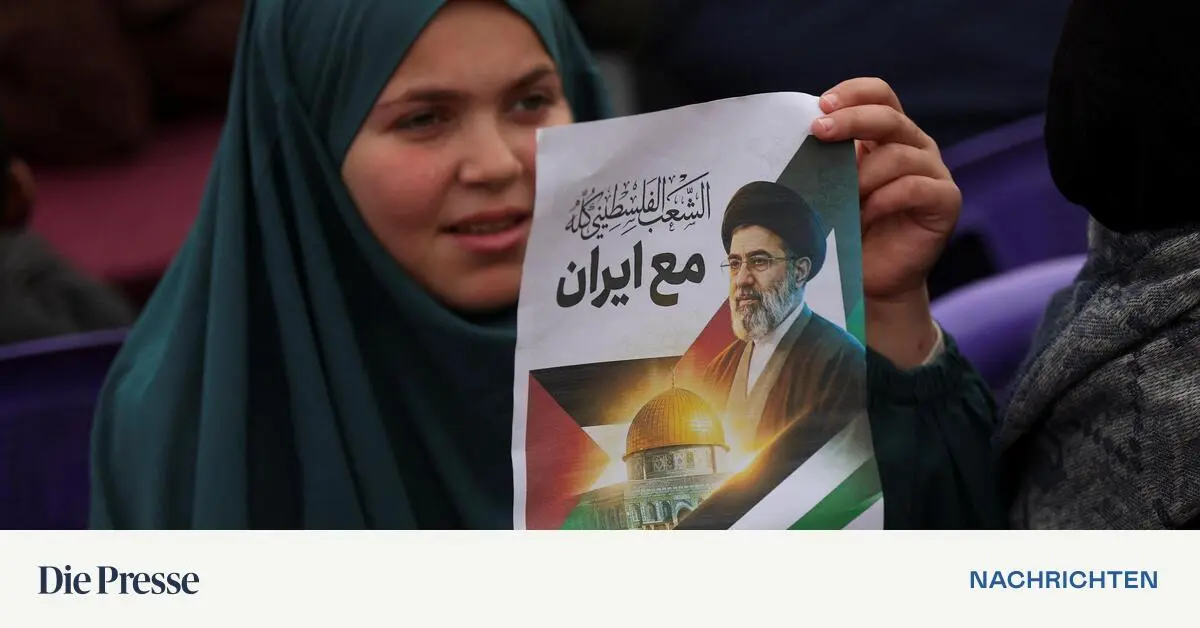
Die Weltgesundheitsorganisation (WHO) warnt vor einer sich zuspitzenden Gesundheitskrise im Iran und im Libanon infolge des seit Ende Februar andauernden Kriegs im Nahen und Mittleren Osten. Nach WHO-Angaben wurden im Iran seit Beginn der Kampfhandlungen am 28. Februar 18 Angriffe auf Gesundheitseinrichtungen dokumentiert. Dabei seien acht Beschäftigte des Gesundheitswesens getötet worden. Solche Angriffe kosteten nicht nur Leben, sondern entzogen Gemeinden in einer Ausnahmesituation den Zugang zu medizinischer Versorgung, betonte die Organisation. Personal, Patienten und Einrichtungen müssten nach humanitärem Völkerrecht jederzeit geschützt werden.
Auch der Libanon ist laut WHO erheblich betroffen. Im selben Zeitraum wurden dort 25 Angriffe auf Gesundheitszentren registriert, bei denen 16 Menschen ums Leben kamen und 29 verletzt wurden. Parallel dazu berichtet die WHO unter Verweis auf nationale Behörden von hohen Opferzahlen in beiden Ländern. Im Iran seien 1.255 Menschen getötet und mehr als 15.100 verletzt worden. Im Libanon meldeten die Behörden 634 Todesopfer und über 1.586 Verletzte; nach jüngsten Angaben libanesischer Stellen liege die Zahl der Toten bereits bei rund 690. Die WHO spricht von mehr als 800.000 Binnenvertriebenen im Libanon.
Die militärische Eskalation hat massive Fluchtbewegungen ausgelöst. Schätzungen zufolge sind im Iran mehr als 100.000 Menschen innerhalb des Landes vertrieben worden, im Libanon bis zu 700.000. Viele suchten in überfüllten Gebäuden Zuflucht, häufig mit nur eingeschränktem Zugang zu sauberem Wasser und sanitären Einrichtungen. Diese Bedingungen erhöhten das Risiko für Atemwegs- und Durchfallerkrankungen, warnt die WHO. Besonders gefährdet seien Frauen und Kinder, die in Notunterkünften oft nur eingeschränkten Zugang zu medizinischer Versorgung und Vorsorgemaßnahmen hätten.
Zusätzlich zu den direkten Kriegsfolgen beobachtet die WHO im Iran auch Gesundheitsrisiken durch Umwelteinflüsse. Nach Angriffen auf Ölanlagen sei dort sogenannter „schwarzer Regen“ niedergegangen, zudem seien giftige Verbindungen in der Luft gemessen worden. Diese könnten Atemwegsprobleme auslösen, erklärte die Organisation und schloss sich den Empfehlungen iranischer Behörden an, die Bevölkerung vor den gesundheitlichen Gefahren zu warnen. Vor dem Hintergrund anhaltender Luftschläge der USA und Israels auf Ziele im Iran sowie fortgesetzter Angriffe im Libanon weist die WHO darauf hin, dass der Schutz medizinischer Infrastruktur und des Gesundheitspersonals entscheidend sei, um eine weitere Verschärfung der humanitären Lage zu verhindern.