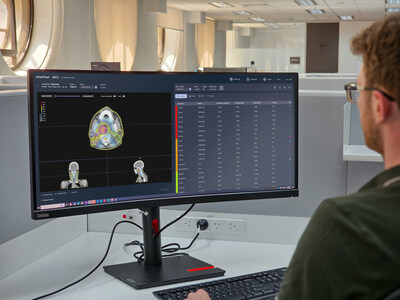
SYDNEY, May 14, 2026 /PRNewswire/ -- Leading Australian cancer care provider, GenesisCare, is pleased to be collaborating with SeeTreat to enable suitable cancer patients access to the latest technology in offline adaptive treatment assessment. SeeTreat's ART.1 software will be rolled out at GenesisCare from July 2026 to support automated, adaptive treatment evaluation for eligible patients.
GenesisCare Chief Medical Officer, Dr Marcus Dreosti, explains that "whilst radiation treatment is proven to be a safe and highly effective cancer treatment, unwanted toxicities and side effects can occur due to changes in a patient's anatomy over the course of treatment. Optimising treatment post commencement, called 'adaptive radiotherapy', is labour intensive and complex. We're excited that through this collaboration with SeeTreat, we now have the opportunity to make adaptive radiotherapy more accessible for patients across our Australian network."
GenesisCare's decision to implement the SeeTreat ART.1 tool follows a multidisciplinary study of the software on 64 head and neck, breast, and prostate cancer patients treated on their mixed vendor linac platform assessing accuracy, efficiency and patient impact. The study showed significant potential benefits to standardising and scaling adaptive workflows, providing actionable insights to clinicians when they need it.
Radiation Oncologist, Dr Melanie Jackson, shares: "ART.1 is proving to be an easy-to-use tool to help me identify which of my patients would benefit from a new treatment plan and when this is optimal. The efficiency of the software and personalisation of care ensures we match our clinical team's effort and valuable resource time to achieve the best possible patient outcomes."
SeeTreat CEO and Founder, Dr Trang Nguyen said "GenesisCare is a truly patient-centric and innovative organisation with passionate doctors and clinical staff constantly striving to deliver the best care possible. Working with the GenesisCare team is a pleasure and we're proud to be collaborating with the group."
SeeTreat's ART.1 software has UKCA mark, CE mark, Australian ARTG registration and is FDA pending.
About SeeTreat
SeeTreat is doctor backed, physics led, software medical device company founded in 2023, led by Dr Trang Nguyen, Antonia Dalton and Professor Paul Keall. Our vision is to reduce the burden of cancer through broadly accessible software technology improving quality and accuracy of treatment. SeeTreat is a global company with a current install base in the UK, Europe, USA and Australia.
For more information visit https://www.seetreatmedical.com/ and follow SeeTreat on LinkedIn https://www.linkedin.com/company/seetreat-medical
About GenesisCare
GenesisCare is a proudly Australian-run cancer care provider, specialising in radiation therapy with a growing footprint in medical oncology, theranostics and personalised medicine. Our relentless pursuit for better care is reflected in our advanced treatment techniques, technology and contemporary service experience.
Our dedicated research team partners globally to be first movers in bringing clinical innovations to patients close to home.
Over 35,000 people a year entrust us with their care across more than 50 locations nationally.
Photo - https://mma.prnewswire.com/media/2978722/Supporting_Image.jpg
 View original content:https://www.prnewswire.co.uk/news-releases/genesiscare-and-seetreat-to-bring-personalised-offline-adaptive-monitoring-to-more-than-40-radiation-oncology-centres-across-australia-302770327.html

Die Schweizer Stimmberechtigten haben einer Verschärfung des Zivildienstgesetzes zugestimmt. Laut definitiven Ergebnissen votierten 52,5 Prozent für die Reform, rund 47,5 Prozent dagegen. Damit setzte sich der Kurs von Bundesrat und Parlament durch, den Zivildienst wieder klar als Ausnahme und nicht als gleichwertige Alternative zum obligatorischen Militärdienst zu definieren. Die Stimmbeteiligung lag mit rund 58 Prozent vergleichsweise hoch; 1'690'343 Personen legten ein Ja in die Urne, 1'531'878 stimmten Nein.
Das Ergebnis offenbart deutliche regionale Bruchlinien. Während viele deutschsprachige Kantone die Reform klar unterstützten – etwa Aargau mit 56,2 Prozent, St. Gallen mit 58,9 Prozent, Graubünden mit 59,3 Prozent und Luzern mit 56,9 Prozent Ja – fiel das Verdikt in der Romandie gespalten aus. Genf, Waadt, Neuenburg und Jura lehnten die Vorlage ab, mit Nein-Anteilen von bis zu gut 60 Prozent im Jura. Basel-Stadt stellte sich ebenfalls gegen die Verschärfung, und der Kanton Zürich kippte nach Auszählung der städtischen Stimmen knapp ins Nein-Lager. Demgegenüber sagten Wallis (57,1 Prozent), Freiburg (50,2 Prozent) und das Tessin (53,9 Prozent) Ja zur Reform.
Kern der Vorlage ist ein Paket von sechs Massnahmen, die den Wechsel aus der Armee in den Zivildienst deutlich unattraktiver machen sollen. Künftig müssen alle, die in den Zivildienst wechseln, mindestens 150 Diensttage leisten – unabhängig davon, wie viele Tage im Militär noch offen wären. Für Unteroffiziere und Offiziere gilt damit neu derselbe Umrechnungsfaktor von 1,5 Zivildiensttagen pro verbleibendem Militärdiensttag wie für einfache Soldaten. Wer alle Armee-Ausbildungstage bereits absolviert hat, kann künftig nicht mehr in den Zivildienst wechseln, um der Schiesspflicht zu entgehen.
Zusätzlich werden der zeitliche Rahmen und die Einsatzmöglichkeiten enger gezogen. Zivildienstleistende müssen ab dem Jahr nach ihrem ersten Einsatz jährlich Dienst leisten, bis alle vorgeschriebenen Tage erfüllt sind. Wer vor oder während der Rekrutenschule ein Gesuch stellt, muss den langen Anfangseinsatz von 180 Tagen bereits im Jahr nach der Zulassung absolvieren. Einsätze, die ein begonnenes Medizinstudium voraussetzen, werden gestrichen – offiziell, weil der Armee medizinisches Personal fehlt. Bürgerliche Parteien werteten das Ja als Bestätigung, dass der Zivildienst eine Ausnahme bleiben solle; die links-grüne Nein-Allianz verweist angesichts des knappen Resultats auf die breite gesellschaftliche Unterstützung für den Zivildienst und kündigt an, weitere Verschärfungen bekämpfen zu wollen.