WAUKESHA, Wis., June 2, 2026 /PRNewswire/ -- Generac Holdings Inc. (NYSE: GNRC), a leading global designer, manufacturer and provider of energy technology solutions and other power products, today announced it has signed a global supply agreement with a leading hyperscale data center operator to supply backup power generators for the company's data center infrastructure.
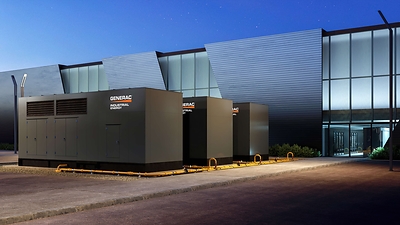
Data centers underpin the digital infrastructure people rely on every day — banking systems, healthcare delivery, transportation logistics, emergency response, and the broader digital economy. Reliable backup power is the resilience layer that keeps these essential services running through grid disruptions, weather events, and high-demand periods.
The global supply agreement was awarded following a rigorous qualification process including multiple factory visits, performance and quality system reviews, and audits across Generac's broader vendor base.
"This agreement positions Generac at the heart of supporting essential services and the digital economy," said Aaron Jagdfeld, Chairman, President and CEO of Generac. "The successful navigation of this approval process solidifies our position as a top-tier supplier of large megawatt backup power generators and reflects the kind of relationship we expect will grow as the digital economy continues to scale."
"Generac has been supporting mission-critical infrastructure for decades," said Erik Wilde, EVP and President, Domestic C&I at Generac. "Securing this agreement reflects our culture — an engineering-first organization focused on backup power, with the service capabilities required to support critical infrastructure at scale."
Generac has made a series of strategic investments to scale its Commercial & Industrial business and strengthen its global capabilities. Recent initiatives include the collaboration with EPC Power to deploy fully integrated energy solutions for data center applications worldwide, and the acquisition of Enercon, adding 50 years of expertise in generator enclosures and switchgear for mission-critical applications.
These efforts are complemented by the ongoing expansion of manufacturing and operational capacity at facilities in Beaver Dam, Oshkosh and Sussex, Wisconsin, as well as across key regions including APAC, Europe, the Middle East and Latin America, reinforcing Generac's ability to support data center growth with reliable, end-to-end solutions on a global scale. Generac's expertise is further demonstrated through the successful delivery of energy solutions for major colocator data center projects worldwide, supporting some of the industry's leading operators in ensuring resilient, mission-critical infrastructure for rapidly growing digital economies.
About Generac
Generac is a total energy solutions company that empowers people to use energy on their own terms. Founded in 1959, Generac is a leading global designer, manufacturer, and provider of a wide range of energy technology solutions. The Company provides power generation equipment, energy storage systems, energy management devices & solutions, and other power products serving the residential, commercial, data center, telecom, rental and industrial markets. The Company's broad portfolio of energy technology offerings for homes and businesses enables its mission to Power a Smarter World and lead the evolution to more resilient, efficient, and innovative energy solutions.
Forward-looking Information
Certain statements contained in this news release, as well as other information provided from time to time by Generac Holdings Inc. or its employees, may contain forward-looking statements that involve risks and uncertainties that could cause actual results to differ materially from those in the forward-looking statements. Forward-looking statements give Generac's current expectations and projections relating to the Company's financial condition, results of operations, plans, objectives, future performance and business. You can identify forward-looking statements by the fact that they do not relate strictly to historical or current facts. These statements may include words such as "anticipate," "estimate," "expect," "forecast," "project," "plan," "intend," "believe," "confident," "may," "should," "can have," "likely," "future," "optimistic" and other words and terms of similar meaning in connection with any discussion of the timing or nature of future operating or financial performance or other events.
Any such forward-looking statements are not guarantees of performance or results, and involve risks, uncertainties (some of which are beyond the Company's control) and assumptions. Although Generac believes any forward-looking statements are based on reasonable assumptions, you should be aware that many factors could affect Generac's actual financial results and cause them to differ materially from those anticipated in any forward- looking statements, including:
Should one or more of these risks or uncertainties materialize, Generac's actual results may vary in material respects from those projected in any forward-looking statements. A detailed discussion of these and other factors that may affect future results is contained in Generac's filings with the U.S. Securities and Exchange Commission ("SEC"), particularly in the Risk Factors section of the Annual Report on Form 10-K and in its periodic reports on Form 10-Q. Stockholders, potential investors and other readers should consider these factors carefully in evaluating the forward-looking statements.
Any forward-looking statement made by Generac in this press release speaks only as of the date on which it is made. Generac undertakes no obligation to update any forward-looking statement, whether as a result of new information, future developments or otherwise, except as may be required by law.
CONTACT: corporatecommunications@generac.com
 View original content to download multimedia:https://www.prnewswire.co.uk/news-releases/generac-signs-global-supply-agreement-with-leading-hyperscale-data-center-operator-to-supply-backup-power-302787906.html

Der Bundesrat verschärft im Streit um das Frühfranzösisch den Ton und greift zu einem bundesrechtlichen Instrument. Alle Primarschülerinnen und Primarschüler in der Schweiz sollen künftig zwingend eine zweite Landessprache lernen. Um dieses Ziel durchzusetzen, hat die Landesregierung eine Revision des Sprachengesetzes in die Vernehmlassung geschickt. Sie reagiert damit auf Vorstösse in mehreren deutschsprachigen Kantonen, Französisch aus den Stundenplänen der Primarschule zu streichen.
Im Zentrum steht die Frage, welche Rolle die Landessprachen im obligatorischen Unterricht spielen sollen. Für den Bundesrat ist dies eine «Frage von nationaler Bedeutung». Die Bundesverfassung verpflichte Bund und Kantone gemeinsam, die Landessprachen zu erhalten, die Verständigung zwischen den Sprachgemeinschaften zu stärken und nationale Minderheiten zu schützen, hält die Regierung fest. Der Bund sehe sich damit in der Verantwortung, den Zusammenhalt zwischen den Sprachregionen und den Respekt vor der sprachlichen Vielfalt zu sichern, während die Kantone ihr Schulwesen so zu harmonisieren hätten, dass Qualität und Durchlässigkeit des Bildungsraums Schweiz gewahrt bleiben.
Der Konflikt entzündet sich an der 2004 beschlossenen Sprachenstrategie der Kantone, die 2009 im HarmoS-Konkordat verankert wurde. Diese sieht vor, dass Kinder in der Primarschule zwei Fremdsprachen erlernen – darunter eine zweite Landessprache. In einzelnen Kantonen gibt es inzwischen Bestrebungen, den Unterricht einer Landessprache als Fremdsprache auf der Primarstufe zu streichen. Das widerspreche der gemeinsamen Strategie, schreibt der Bundesrat und zeigt sich über diese Entwicklung «beunruhigt».
Um gegenzusteuern, legt die Regierung zwei Varianten für eine Gesetzesänderung vor. Die erste folgt dem HarmoS-Modell: In der Primarschule sollen obligatorisch zwei Fremdsprachen unterrichtet werden, eine Landessprache und Englisch. Damit würde die heutige Praxis in den 15 HarmoS-Kantonen bundesrechtlich abgesichert und für alle gelten, sollte es nötig werden. Die zweite Variante lässt den Kantonen mehr Spielraum: Sie verpflichtet lediglich dazu, dass eine zweite Landessprache spätestens ab der Primarschule und durchgehend bis zum Ende der obligatorischen Schulzeit unterrichtet wird, ohne Englisch explizit als zweite Fremdsprache vorzuschreiben.
Mit der Revision will der Bundesrat den Rahmen abstecken für den Fall, dass die Kantone ihre Sprachenstrategie ganz oder teilweise aufgeben. Konkrete Entscheide sind noch offen: Zunächst läuft bis zum 5. Oktober 2026 eine Vernehmlassung, in der Kantone, Parteien und weitere Akteure Stellung beziehen können. Erst danach wird sich zeigen, ob sich das strengere HarmoS-Modell oder die flexibelere Lösung durchsetzt – und wie viel Gewicht der Bund seiner sprachpolitischen Rolle im Schulbereich tatsächlich geben will.