Nestled in the foothills of Mount Emei, the mountainside sanctuary offers access to one of China's most revered landscapes, defined by mist-shrouded peaks, centuries-old temples and enduring traditions.
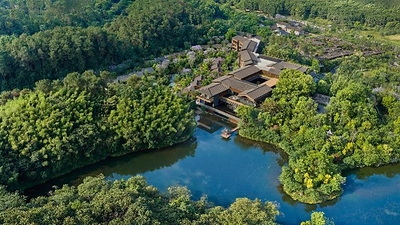
EMEISHAN, China, Aug. 3, 2026 /PRNewswire/ -- Banyan Group ("Banyan Tree Holdings Limited" or the "Group" – SGX: B58), an independent global hospitality company, has expanded the presence of its flagship Banyan Tree brand in China with the opening of Banyan Tree Mount Emei in China's Sichuan Province. Nestled in the foothills of Mount Emei (also known as Emeishan), the resort serves as a gateway to the Mount Emei Scenic Area, part of a UNESCO World Heritage Site inscribed for both its cultural and natural significance and known for its rich biodiversity.
"Mount Emei holds a distinctive place in China's cultural and natural heritage. As one of China's Four Sacred Buddhist Mountains, it brings together centuries of tradition and exceptional ecological value," said Philip Ding, Senior Vice President, Head of Hotel Operations, Northeast Asia and Business Development, China, Banyan Group. "We look forward to welcoming guests to our mountainside sanctuary as they explore this important destination at an unhurried pace, moving beyond traditional sightseeing to engage more deeply with its landscape, living traditions and natural rhythms."
A Mountainside Sanctuary Embraced by Nature
Inspired by the traditional courtyard homes of western Sichuan, the resort reinterprets the region's architecture in a contemporary form that follows the natural contours of a forested valley. Its design, landscaping and guest experiences draw on the surrounding environment and local culture.
During development, seven century-old camphor trees, together with all existing trees measuring more than 10 centimetres in trunk diameter, were retained in their original locations. Pathways through the bamboo forest follow the natural terrain, allowing bamboo to grow through and alongside the walkways while preserving the character of the site.
The guest arrival, framed by mature camphor trees, leads to an open-air courtyard inspired by the traditional Chinese architectural principle of "four waters returning to the hall" (si shui gui tang), in which pitched roofs channel rainwater into a central courtyard. Throughout the resort, filtered light, mountain air, the sound of water and views across bamboo groves and forested slopes create a quiet dialogue between architecture and nature.
The resort comprises 130 rooms and villas across six categories, each featuring a private outdoor hot spring pool. Mountain View Rooms frame the changing scenery across the seasons, Garden Villas open onto private gardens, and one- and two-bedroom Lakeside Villas feature landscaped courtyards beside the water. The 320-square-metre Presidential Villa is complemented by a private garden of similar size and a terrace overlooking the forest and stream, providing greater privacy for families and small groups.
Wellbeing and Cultural Immersion
At Banyan Tree Mount Emei, wellbeing follows the rhythms of the surrounding landscape. The award-winning Banyan Tree Spa draws on Asian healing traditions and local inspiration, with five private treatment rooms designed for couples. A Rainforest-inspired hydrothermal experience and spa café complement the treatments, allowing guests to move between water, warmth and rest.
Beyond the spa, guests can walk the bamboo forest trail, practise yoga in the morning light or relax with a weightless floating therapy experience. The temperature-controlled swimming pool offers 180-degree views of the bamboo groves and lake, while a dedicated yoga studio and fitness centre provide space for daily movement.
Local culture also informs the guest experience. Banyan Tree Gallery presents a curated selection of local crafts and cultural creations, supporting artisans and makers from the surrounding community. Emei martial arts, traditional tie-dyeing and bamboo weaving invite guests to engage with the region's living heritage through hands-on participation. For younger guests, the Terra Kids Club brings together nature, exploration and art through discovery, creativity and play.
A Culinary Journey in the Mountains
Dining at Banyan Tree Mount Emei reflects the culinary traditions of Sichuan, complemented by Cantonese and international influences. Jiayao Chinese Restaurant highlights locally sourced ingredients and regional specialities alongside Cantonese favourites and contemporary interpretations. Mingyue All-Day Dining brings together Chinese and international flavours, with an emphasis on seasonal ingredients and health-conscious choices, framed by lake and mountain views. At the Lobby Lounge, afternoon tea gives way to evening drinks as the light shifts across the landscape.
For a more intimate experience, Banyan Tree's signature Destination Dining offers private settings by the tranquil lake and within the bamboo grove. Guests can enjoy afternoon tea aboard a traditional black-canopy boat, dine in the Mid-Lake Pavilion or among the bamboo forest, or gather in the Study Room for tea and conversation.
Celebrations in the Heart of Nature
More than 1,200 square metres of flexible indoor and outdoor event space provides a natural setting for meetings, celebrations and private gatherings. The pillarless, 500-square-metre Xiangzhang Ballroom is complemented by an approximately 220-square-metre foyer and a garden terrace, allowing events to flow seamlessly between indoor and outdoor spaces.
The Forest Platform spans approximately 500 square metres within the bamboo forest, bordered by bamboo on one side and pine trees on the other. Set apart from the resort's main buildings, the Study Room takes its name from Huizong Hall, the original name of nearby Baoguo Temple. Designed by contemporary Chinese architect Zhuang Ziyu, the building follows the natural contours of the mountainside and houses six multifunctional rooms for cultural gatherings, private dining, tea rituals and calligraphy.
Getting There
Banyan Tree Mount Emei is a five-minute drive from Emeishan High-Speed Railway Station and around two minutes from the entrance to the Mount Emei Scenic Area. Chengdu Shuangliu International Airport is approximately two hours away by car, while Chengdu Tianfu International Airport is around two hours and 15 minutes away. Leshan Airport, which is expected to begin operations later in 2026, will be approximately 40 minutes from the resort by car.
For more information and reservations, please visit BanyanTree.com.
For high-resolution images, please download here.
ABOUT BANYAN GROUP
Banyan Group ("Banyan Tree Holdings Limited" or the "Group" - SGX: B58) is an independent, global hospitality company with purpose. The Group prides itself on its pioneering spirit, design-led experiences and commitment to responsible stewardship. Its extensive portfolio spans 100 hotels and resorts, more than 140 spas and galleries, and 20 plus branded residences in over 20 countries. Comprising 13 global brands, including the flagship brand Banyan Tree, each distinct yet united under the experiential membership programme with Banyan. The founding ethos of "Embracing the Environment, Empowering People" is embodied through the Banyan Global Foundation and Banyan Academy. Banyan Group is committed to remaining the leading advocate of sustainable travel, with a focus on regenerative tourism and innovative programmes that elevate the guest experience.

 View original content to download multimedia:https://www.prnewswire.co.uk/news-releases/banyan-group-announces-opening-of-banyan-tree-mount-emei-a-gateway-to-the-unesco-world-heritage-listed-site-in-chinas-sichuan-province-302841053.html

Postauto treibt den Einsatz autonomer Fahrzeuge in der Ostschweiz voran und bereitet nach eigenen Angaben Europas grösstes Robo-Taxi-Netz vor. Das Bundesamt für Strassen (Astra) hat dem Unternehmen eine Ausnahmebewilligung erteilt, damit die speziell ausgerüsteten E-Autos im St. Galler Rheintal sowie in den Kantonen Appenzell Ausserrhoden und Appenzell Innerrhoden automatisch verkehren dürfen. Seit dem 1. Juni sind die Fahrzeuge in einem rund 80 Quadratkilometer grossen Gebiet unterwegs – vorerst noch zu Testzwecken und mit Sicherheitsfahrerinnen und -fahrern an Bord.
Herzstück des Projekts ist die Flotte von bis zu 25 sogenannten "AmiGo"-Fahrzeugen, die im Endausbau mit Automatisierungsgrad Level 4 fahren sollen. Postauto kooperiert dafür mit Apollo Go, der Robotaxi-Sparte des chinesischen Technologiekonzerns Baidu. Die Fahrzeuge werden im typischen Postauto-Gelb lackiert und elektrisch betrieben. Während der Testphase dürfen die Sicherheitsfahrer ihre Hände vom Lenkrad nehmen; sie können jedoch jederzeit eingreifen, wenn die Situation es erfordert – etwa an unübersichtlichen Verzweigungen oder bei forsch auftretendem Gegenverkehr.
Im Alltagstest auf einer festgelegten Route in Altstätten (SG) zeigt sich das System laut Projektbeteiligten bereits weitgehend stabil, auch wenn der Fahrkomfort in Kurven noch nicht an einen menschlichen Chauffeur heranreicht. Auffällig ist das sehr defensive Verhalten, etwa vor Fussgängerstreifen, wo das Fahrzeug früh abbremst, selbst wenn sich Personen noch in einiger Entfernung befinden. Gesteuert wird der Betrieb zusätzlich aus einer Leitstelle, in der Operatorinnen und Operatoren die Fahrten überwachen und bei Bedarf aus der Ferne eingreifen können.
Der reguläre Betrieb mit fahrerlosen Fahrzeugen ist ab 2027 vorgesehen. Postauto plant, dass Fahrgäste in der Region ihre autonome Fahrt dann probeweise per App buchen können. Astra-Direktor Jürg Röthlisberger sieht im automatisierten Fahren eine grosse Chance und spricht dem Projekt das Potenzial eines "Gamechangers" zu. Es ist nicht der erste Versuch mit selbstfahrenden Fahrzeugen in der Schweiz, aber nach Umfang und Einsatzgebiet der bislang weitreichendste. Die Technologie soll schrittweise verfeinert und insbesondere für ländliche Regionen erprobt werden, in denen flexible, bedarfsgesteuerte Angebote die bestehende Grunderschliessung ergänzen könnten.